

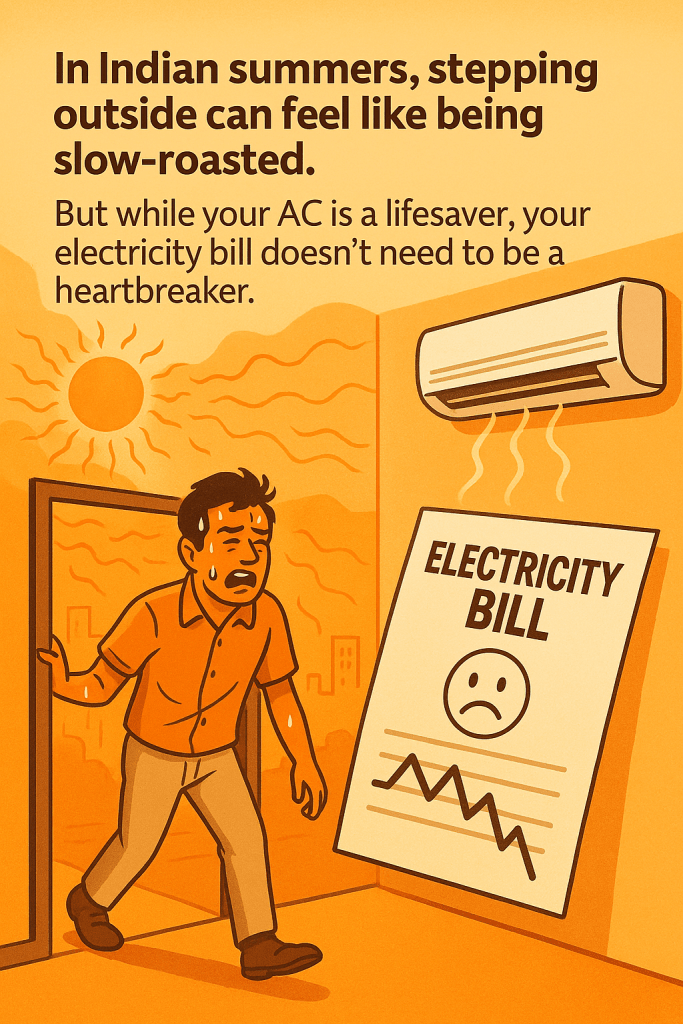
It’s that time of the year again — when stepping outside feels like opening an oven, and your home starts to feel like one too. In tropical regions like India, summer isn’t just hot — it’s hostile. Naturally, the AC becomes your best friend and lifesaver. But let’s be honest — when the electricity bill arrives, it’s more like a frenemy. In peak May, your electricity bill can look like your vacation budget — minus the vacation
But here’s the good news — staying cool doesn’t have to mean burning through your savings. With a few smart tweaks, you can use your AC efficiently, cut down your bills, and even give your appliance a longer life.
So grab some cold lemon water, sit back, and let’s look at how to use your air conditioner the smart way — for maximum comfort and minimum cost.
Let’s break it down — simply, smartly, and with just enough science to stick.
1. Give your AC the Spa Treatment (aka Regular Servicing)
Think of your AC like lungs — if its airways (filters) are clogged, it can’t “breathe” properly. When filters get dirty, airflow is restricted, and the compressor (the energy-hungry part) has to work harder and longer to cool the room.
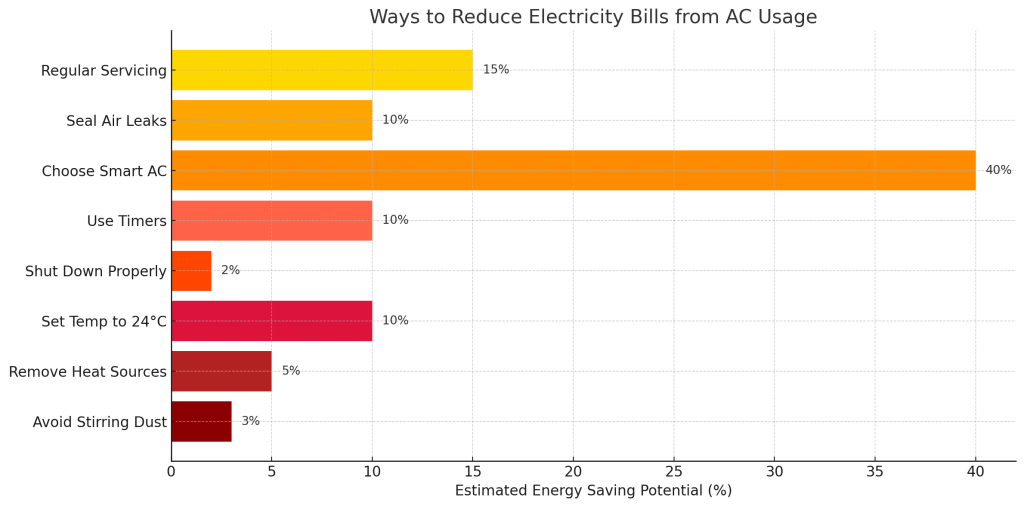
Why it matters: A choked filter can increase energy usage by up to 15%. It can also circulate dust, mould, and pollen — triggering allergies.
✅ Quick fix:
- Clean filters every 2–3 weeks during heavy use.
- Book a professional service before peak summer.
Check refrigerant gas levels — low gas = weak cooling = more electricity consumed.
2. Don’t Let Cool Air Escape: Seal It In
Cool air behaves like water — it flows out through any gap it can find. If doors or windows aren’t sealed properly, your AC will keep running just to replace the air that’s leaking out.
A bit of science: Heat always moves from hot to cold. If your room isn’t insulated, hot outdoor air keeps seeping in — forcing your AC to fight harder.
✅ What helps:
- Keep windows shut and use door seals.
- Close curtains/blinds in the daytime to block solar heat.
- Dark or reflective curtains are especially good at reducing indoor temperature.
3. Choose Your AC Like You Choose a Partner: Smartly
Not all ACs are created equal. If yours is ancient or too big/small for the room, it’s probably guzzling more energy than necessary. An oversized AC cools too fast, then shuts off — without properly dehumidifying the room. An undersized one keeps running nonstop, wasting energy.
The tech tip:
Inverter ACs are smarter — instead of turning on and off, they adjust compressor speed based on cooling need. This avoids energy spikes and offers up to 30–40% energy savings.
✅ Checklist:
- Choose tonnage based on room size (e.g., 1.5 tons for ~150 sq. ft.)
- Keep outdoor units in shade — direct sunlight reduces cooling efficiency.
Leave enough space around the condenser for heat to escape.
4. Use Timers — Because You Don’t Need Antarctic Nights
Your AC doesn’t need to run all night. Once your room reaches a comfortable temperature, your body adjusts — and the AC can rest.
Here’s the science: Body temperature drops slightly when you sleep. Overcooling can disturb sleep quality and cause dehydration or stiffness.
✅ Smart move: Use the timer function to turn off the AC after 2–3 hours. You’ll sleep better and save power.
5. Don’t Just Switch It Off… Shut It Down
When you switch off the AC from the remote, it often goes into standby mode — still drawing “phantom power.”
Fact check: Even in standby, an AC can consume 5–10 watts/hour. It adds up over the month!
✅ The fix: Switch off the AC from the main power switch when not in use to fully cut off the current.
6. Keep it at 24°C — The Magic Number
Setting the AC to 17°C won’t cool your room faster — it just forces the compressor to work nonstop, sucking more electricity and straining the unit.
Science says: Every 1°C lower in temperature can increase energy use by 6–10%.
✅ Gold standard: Set it at 24°C — cool enough to be comfortable, warm enough to be efficient, and ideal for your body too.
7. Keep Heat Sources Away (Yes, Even That Fridge)
Appliances like refrigerators release heat as they work. If you keep one in your AC room, it’s like putting a mini heater next to your cooling system.
Quick logic: The AC now has to remove extra heat — which means more power, longer run time, and higher bills.
✅ Better option: Keep fridges, dryers, or other heat-emitting appliances out of air-conditioned rooms.
Bonus Tip: Avoid Stirring Up Dust
It might be tempting to run a ceiling fan with your AC, but in dusty regions, this can actually work against you. Fans stir up dust, which clogs filters faster and makes the air less clean — especially bad for people with allergies.
✅ Pro tip:
Skip the fan, keep the AC’s airflow clean, and focus on regular room cleaning instead.
Chill Smarter, Not Harder
Your AC doesn’t need to run like a marathoner to keep you cool. With a little care, strategic use, and a touch of science, you can keep summer bearable and affordable.
But here’s something to think about — air conditioners, while convenient, come with hidden costs. Prolonged exposure to artificial cooling can dry out your skin, irritate your respiratory system, and worsen indoor air quality if not properly maintained. On a larger scale, the energy ACs consume and the gases they emit contribute to climate change and environmental degradation.
So while it’s great to use your AC wisely, it’s even better to find ways to rely on it less.In my next blog, we’ll explore alternative cooling methods — natural, affordable, and eco-friendly ways to beat the heat, stay healthy, and protect the planet. Stay tuned!


 Ayantika Malakar
Leave a comment