

Vibrant colors have always held a magnetic pull on me—especially the hues of nature. Think of blooming wildflowers swaying in alpine meadows, butterflies flitting through the air like living confetti, and forests so dense they whisper secrets to the wind. For me, it’s an irresistible call. After completing a spiritually fulfilling journey to Kedarnath temple, my husband and I decided to chase this vivid call of nature deeper into Uttarakhand. Our destination? The lesser-known Kanasar forest region near Chakrata.
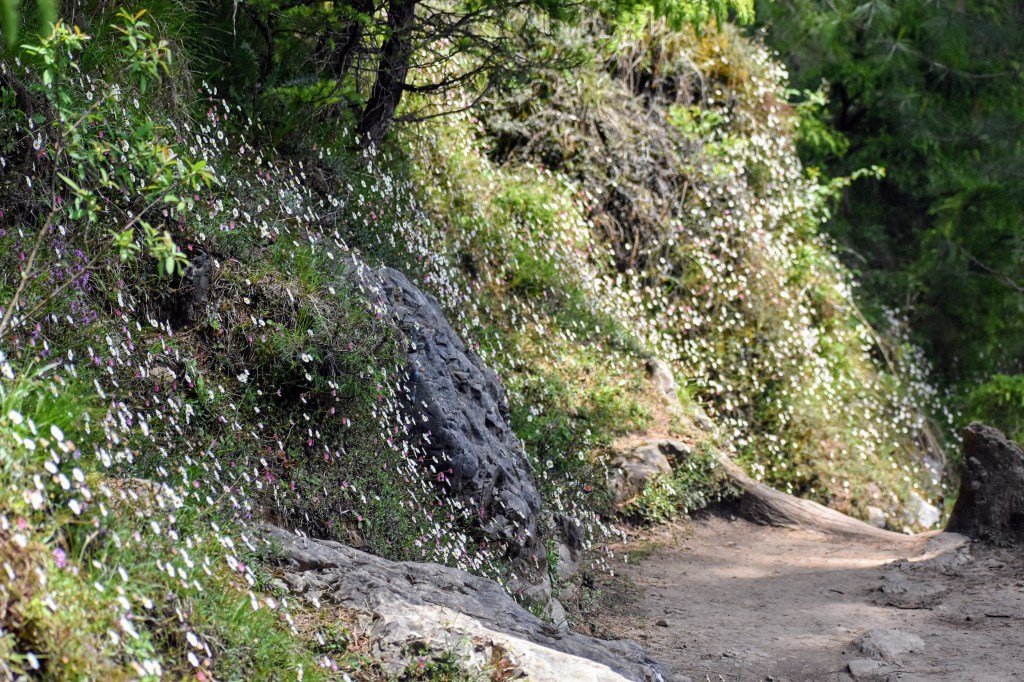
Nestled within the Chakrata forest division in Dehradun district, Kanasar is one of Uttarakhand’s best-kept secrets. While it doesn’t boast of widespread fame, it easily competes with the state’s most picturesque locations. Serene mountain roads, dense deodar forests, the joyful chirping of birds, and carpets of wildflowers on either side of winding lanes—this wasn’t just a drive through nature. It felt like stepping into a living painting, a slice of heaven on Earth.
The Journey to Kanasar: A Scenic Transition
The journey from Sonprayag to Kanasar spanned over 10 hours, so we wiselybroke it into three parts, opting for refreshing overnight halts in Tilwara and Dhanolti. Along this scenic route, we explored the temples of Guptkashi and Kalimath, the tranquil pine forests of Ghansali, witnessed the impressive Tehri Dam, found spiritual solace at Surkanda Devi Temple, and enjoyed the greenery of Dhanolti Eco Park. On the third morning, we resumed our journey toward Chakrata, making a quick stop at the popular Kempty Falls.
The Road Less taken: Mussoorie to Chakrata
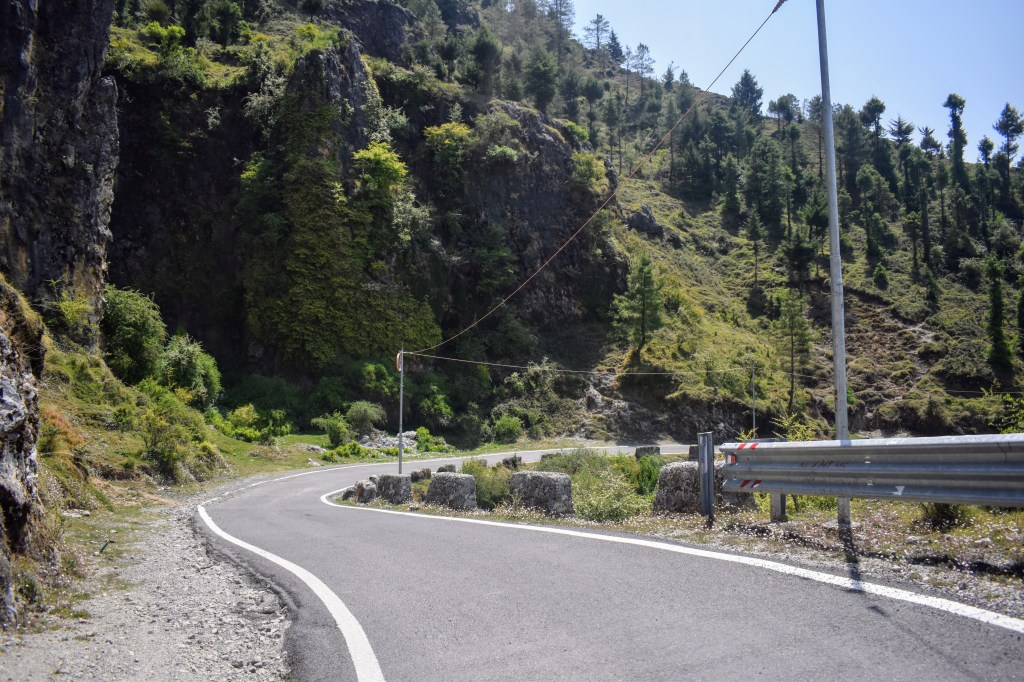
The route from Mussoorie to Chakrata is rarely chosen, which makes it even more special. We were often the only car on the road, allowing us to fully immerse ourselves in the unfolding landscapes. As we meandered through the hills, the vegetation transformed dramatically before our eyes. — Pine trees gave way to drought-resistant xerophytes, tall grasses merged with a riot of colourful flowering trees like Krishnachura (also known as Gulmohar or Royal Poinciana), Radhachura (also known as the peacock flower), and Kanakchura. We even spotted rhododendrons and apple trees – a stunning diversity in flora!
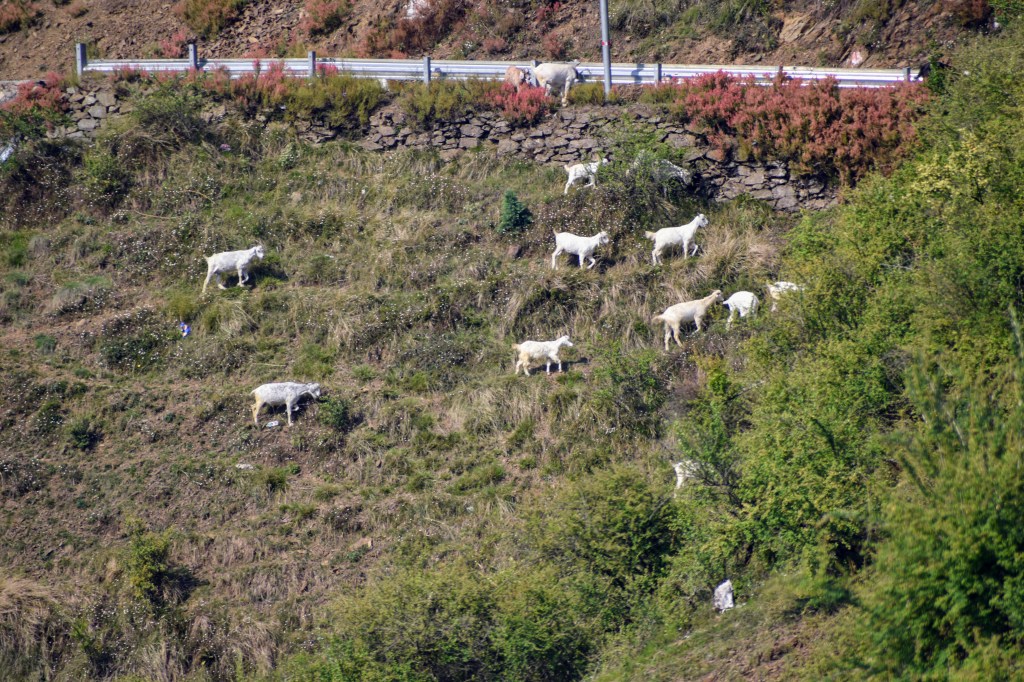
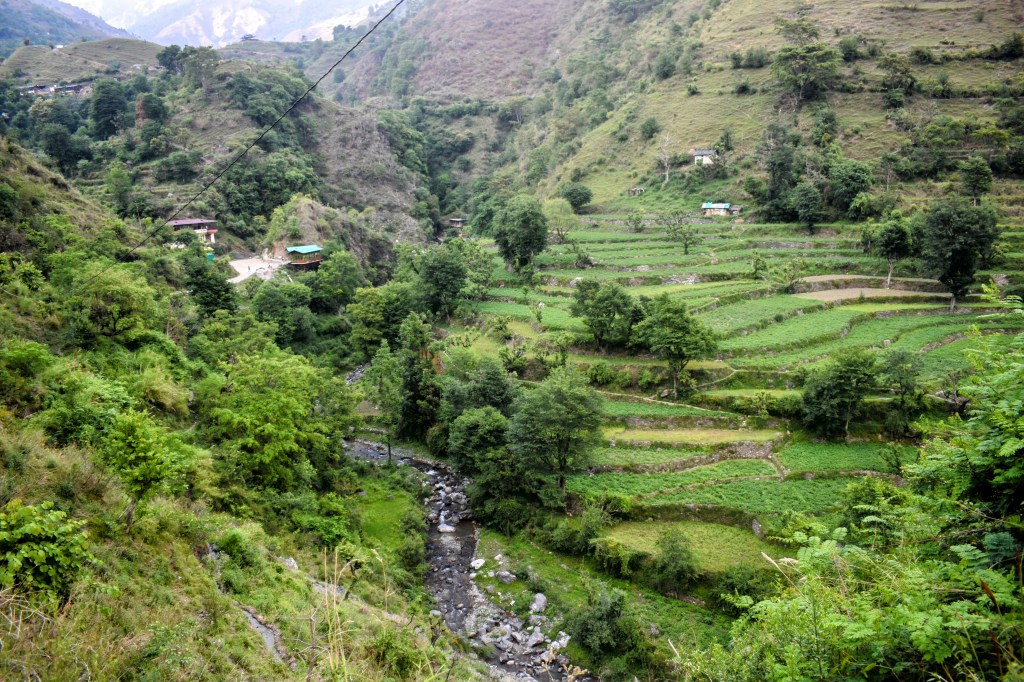
It was the second week of May, and spring was in full, glorious bloom. Though rhododendrons were sparse, the valleys and hillsides were dotted with countless tiny wildflowers of every hue, spreading like lush, emerald carpets. Under a bright sunny sky, with birds soaring gracefully, perhaps dancing to nature’s tune, we drove silently along the sinuous roads. As we climbed higher, the valley deepened and the wind grew bolder.
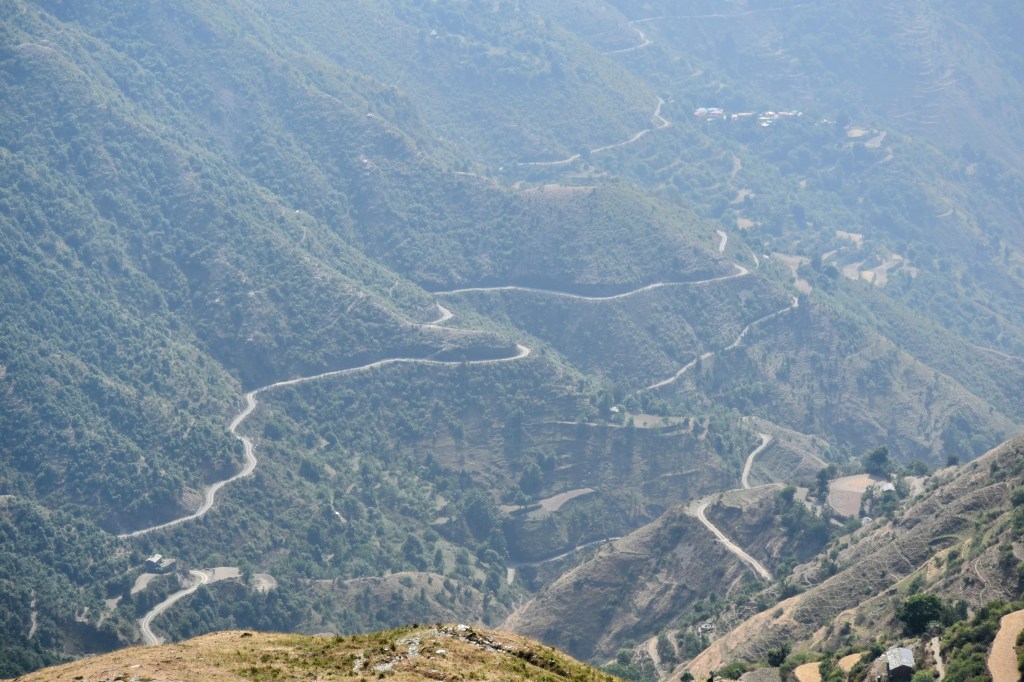
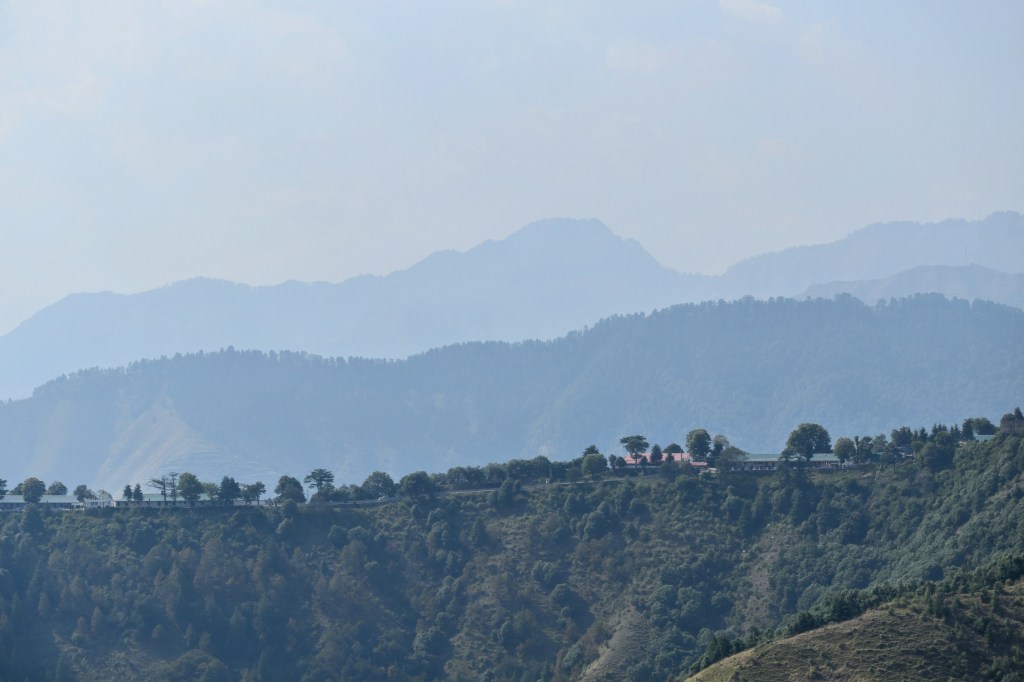
At the Lower Sunset Point, we were treated to a breathtaking 270-degree panoramic view of the mountains and valleys. The landscape was so captivating that we paused several times to click photos, inevitably running late. We reluctantly skipped Chilmiri Neck, the highest point in Chakrata (a motorable spot with a nominal fee, just a few meters ahead of the sunset point), which offers a 360-degree vista and, on clear days, glimpses of Swargarohini and Bandarpoonch peaks.
The Roar of Tiger Falls
“Madam, we’re approaching Chakrata cantonment. Where shall we go next?” Our driver’s voice pulled me out of my blissful reverie. I asked him to divert towards Tiger Falls.
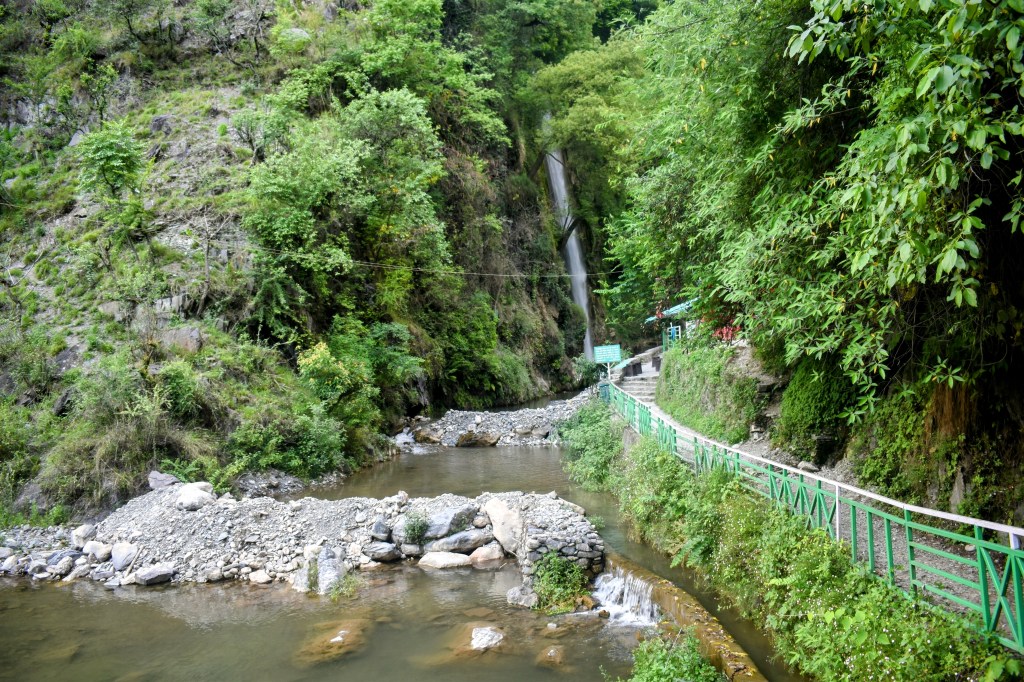
This roaring waterfall, one of the highest in Uttarakhand, is a major draw here. It’s a 20 km downhill diversion from the Chakrata main road, aptly named for the thunderous sound its waters make. There’s a nominal ticket fee of Rs. 30 per person and parking charges. You’ll find two parking areas: one about 100 meters from the falls and another 1.5 km away. If the crowd is thin or you’ve booked accommodation nearby, you might snag the spot closer.
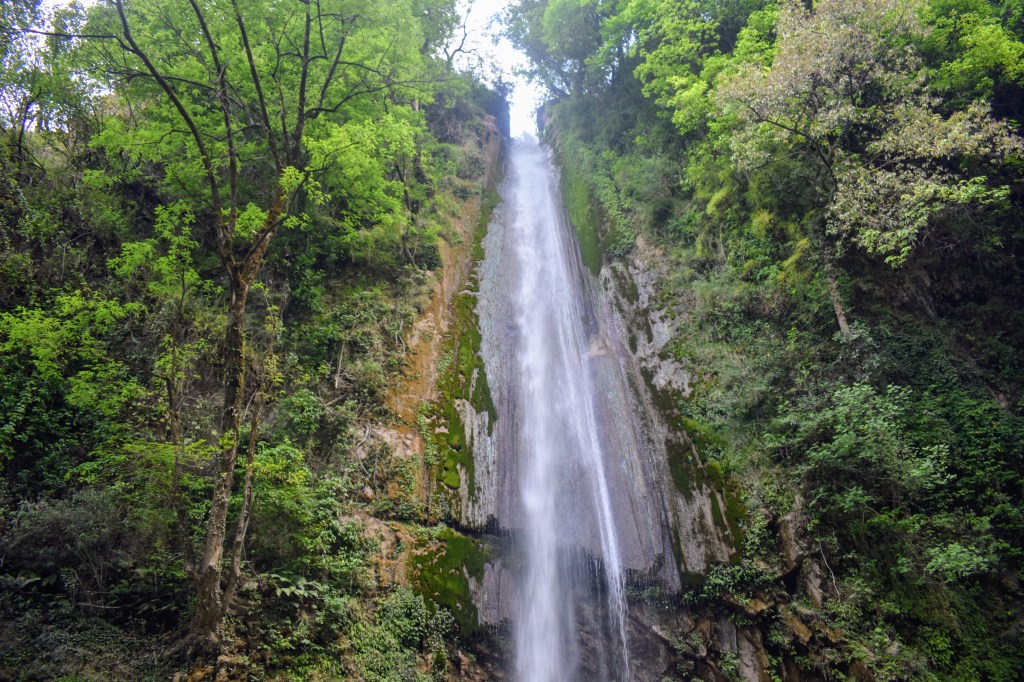
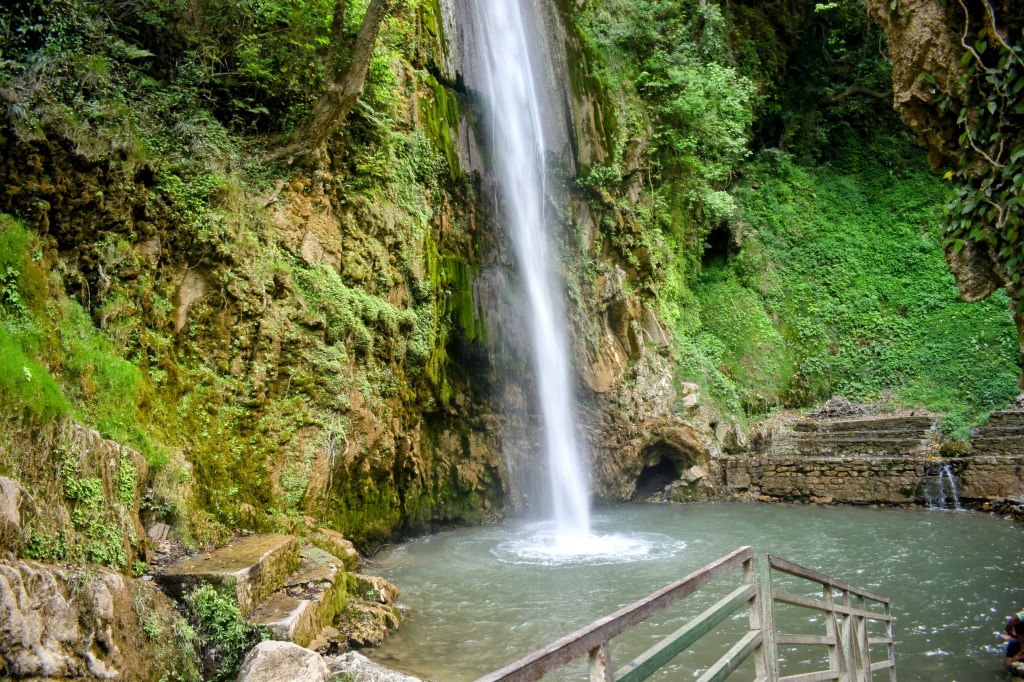
The road to the falls is narrow, steep, and rugged, demanding a skilled driver. The fall itself, mysteriously hidden away in a green cocoon, is a sight to behold. Water plunges directly from a height of approximately 312 feet, creating a mesmerizing cascading plunge pool. The surrounding greenery feels like a vibrant painting, and the sheer force of the gushing water makes it challenging even to bring out your DSLR! We were incredibly fortunate to experience its raw power in solitude, as this spot can get very crowded during peak season, which might dampen the spirit of nature enthusiasts.
Into the Wilderness: Jadi Village Stay
As we drove toward our homestay in Jadi Village, we caught the fleeting magic of the setting sun. Its golden rays bathed the mountains in a warm glow, turning the green leaves amber – a truly mesmerizing view!
Post-dusk, the temperature dipped sharply—further cooled by light rain at night. Jadi, a small forest hamlet, turns quiet and dark after sunset. It gave way to a star-drenched sky. Unlike other hill stations, here you won’t find twinkling lights from distant villages. But the howling wind and rustling leaves become your lullaby.
Hiking to Moila Top and Budher Caves
The next morning dawned bright and sunny. After breakfast, we drove to the Budher Forest Rest House to begin our 2.5 km hike to Moila Top and the Budher Caves.
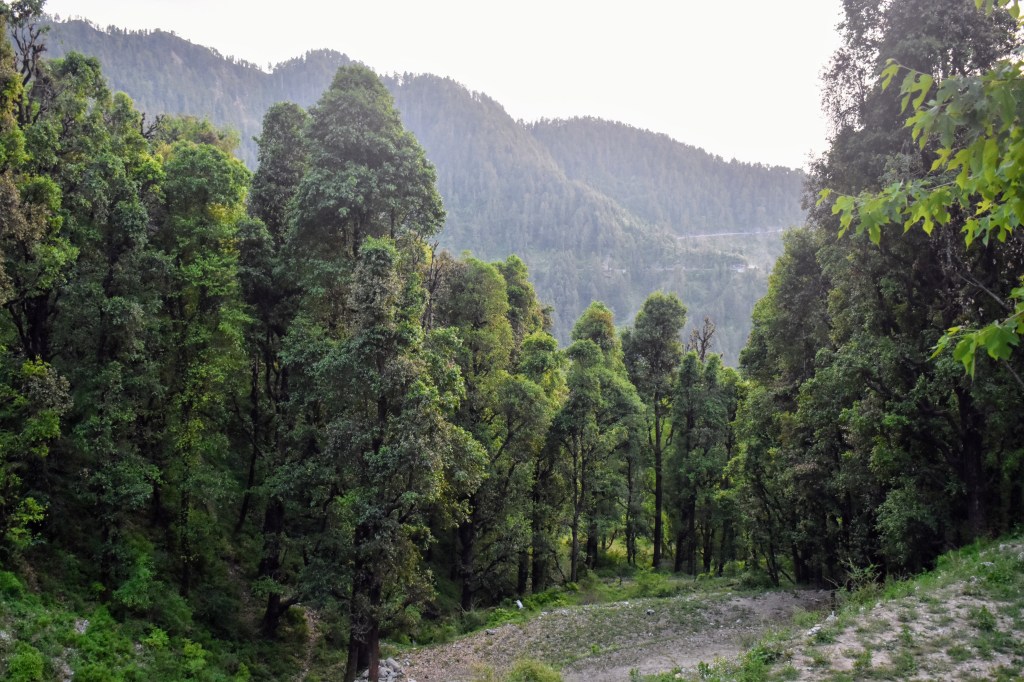
The route is a picturesque delight. The trail winds through tall deodar trees, flowering shrubs, and fluttering butterflies. The dense greenery in every direction, the occasional calls of birds and crickets, and the earthy smell of soil after the light rain provided a truly therapeutic experience. The best part? No mobile network here, ensuring complete, blissful disconnection from distractions—just us and the forest.
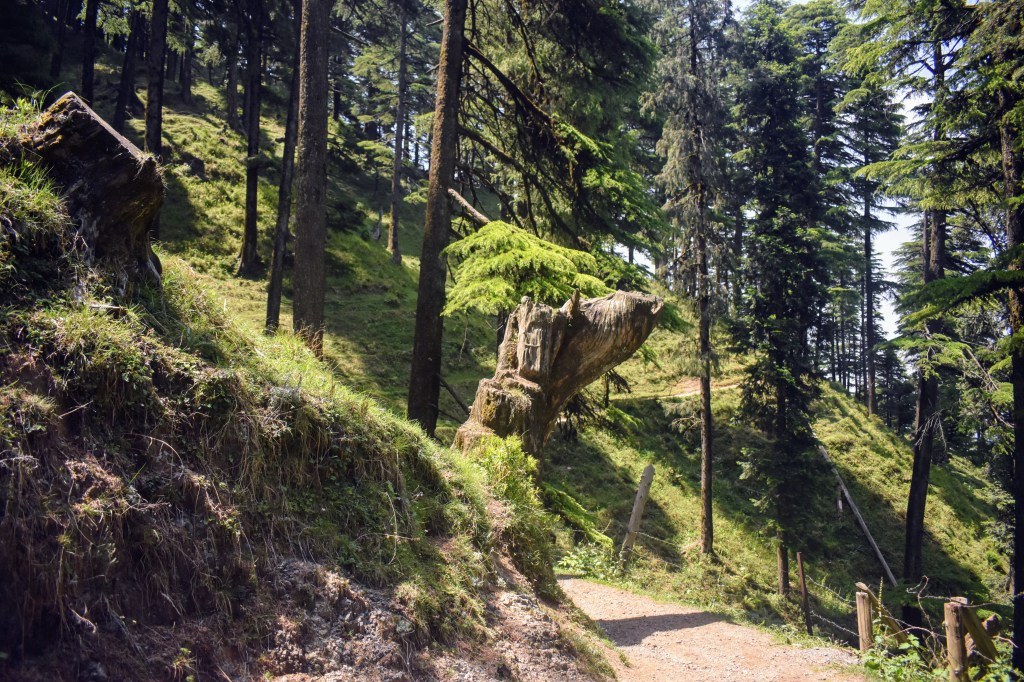
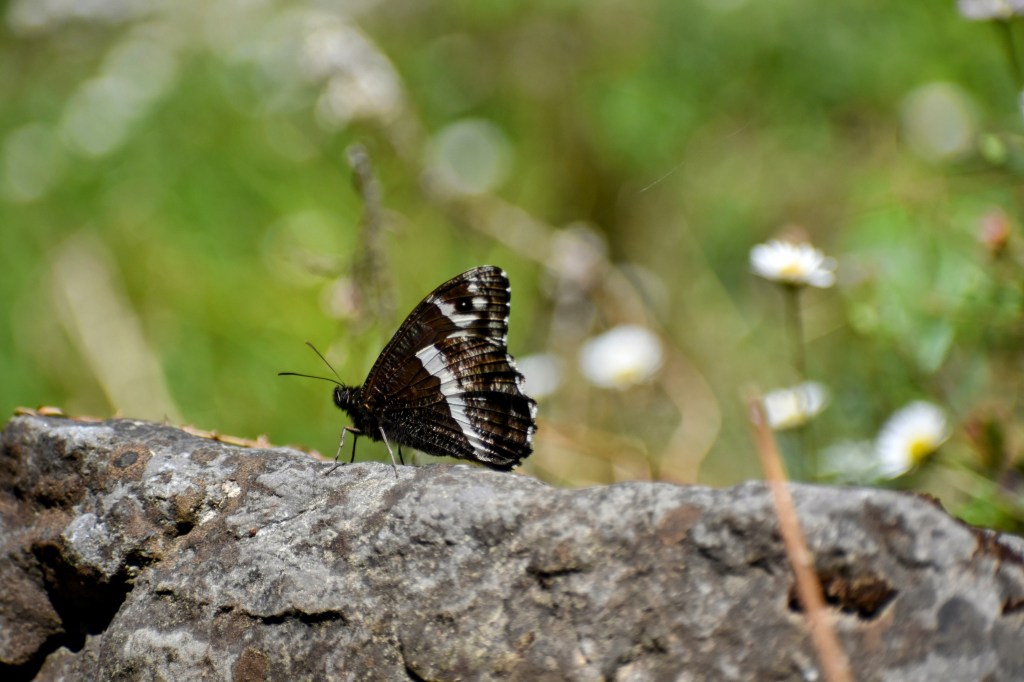

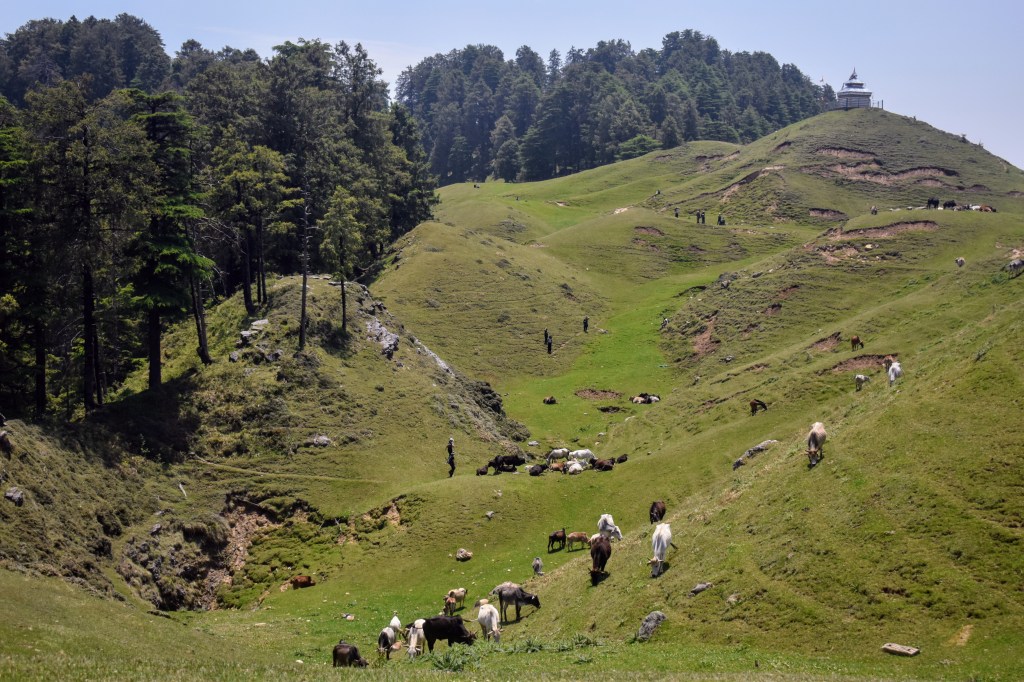
After an hour’s hike, we reached the meadow—and I was spellbound! Vast and undulating, this mountainous meadow held a charm akin to Khajjiar or Baisaran Valley, but without the crowds or development. All around, we saw only emerald grasses, tiny flowers, colossal coniferous trees bordering the meadow, and the endless sky. Cows, bulls, and horses grazed peacefully, with a couple of lonely dogs meandering about. Here, there was no noise, just pure, tranquil silence. All we could do was lie down, bask in the sunlight, and soak in the profound peace. (A note: the sun can get quite scorching sometimes, so carrying an umbrella is a good idea!)

At the peak lies a revered Shiva temple, and just a few steps ahead is the entrance to Budher Cave. The Budher Cave is said to be about 150 meters long, but it is incredibly narrow, requiring a crawl to navigate.
Apart from some weekends during peak season, you’re unlikely to find much company on this route, making it perfect for solitude seekers. The hike officially starts from the Budher Forest Rest House parking.
Tips: The road to Budher FRH is in poor condition. Alternatively, you can start the trek from Lokhandi Snow Point, which adds about an extra kilometer to your hike. It’s an easy trail—just remember to carry:
- Water, umbrella, and camera
- Layered clothing for fluctuating temperatures
- A respectful, silent attitude to preserve the forest’s sanctity
The Heart of Kanasar: Deep in the Deodar Woods
Next, we drove through enchanting roads to our camp in Kanasar, nestled in a dense deodar forest. As our driver put it, “Lag raha hai pahadon mein jungle safari pe aaye hain.” Indeed into the heart of the deodar woods, time seemed to pause — the forest stood like a cathedral of green giants, their towering silhouettes filtering sunlight into a golden mist. Each breath we took felt sacred, infused with the fragrance of ancient bark and whispering pines. In Kanasar, the forest doesn’t just surround you — it swallows you whole in a green embrace.
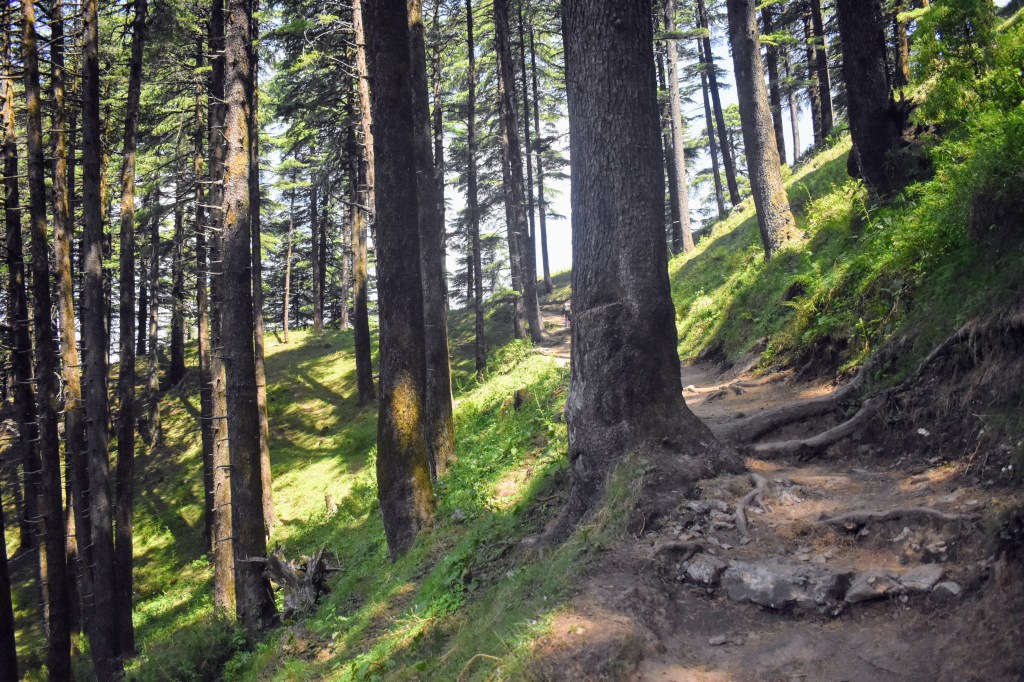
Kanasar offers many more hiking routes. After lunch, we hiked to Koti Kanasar Bugyal, a smaller meadow but no less enchanting. What makes it special are the centuries-old deodar trees. These trees are so tall and dense that sunlight struggled to reach the ground, creating a misty, almost ethereal ambiance. Some trunks were so massive that even three people couldn’t encircle them with joined hands. One such majestic tree there was over 100 years old.
A playful and enthusiastic dog became our impromptu guide, keeping us company and sharing its joy.
That night, we enjoyed a delicious meal and the warm hospitality of Kanasar Jungle camp. My husband and I preferred the stillness of the night—swinging under a sky full of stars, chatting, simply enjoying each other’s company. Moments like these are rare gifts in our fast-paced urban lives.
Reflections: The unspoken magic of Kanasar forest
No words can truly capture the serenity of this forest haven. Every curve and every bend on the road surprised and delighted me. But it’s the absence of unruly crowd that made this magic possible. It’s mostly upon us to keep such places serene and beautiful. By acting responsibly and cooperating with locals and nature, we can ensure this forest remains as alluring for generations to come.
Essential Travel Information
Where to stay?
- Budget to Luxury hotels: Available in Chakrata town
- Camps & resorts: Near Tiger Falls and Kanasar
- Homestays: Scattered in nearby villages
- Forest Rest Houses (FRH): Available at Kanasar, Budher, Chakrata, and Deoban (To book an FRH, you need to write to the concerned DFO well in advance)
What to eat?
Expect to rely primarily on your hotel/homestay for food, outside of the main Chakrata market area.
Best time to visit
Kanasar offers idyllic landscapes year-round, perfect for a calm retreat. However, I recommend visiting in:
- Spring (March–May): Best for blooming flowers and pleasant weather;
- Winter (Dec–Feb): Ideal for snow lovers
- Avoid monsoon (mid June-August) due to heavy rains, landslides and leeches
How to reach?
- Nearest airport/railway station: Dehradun
- Drive from Dehradun: 3–4 hours
- Scenic Route: Mussoorie – Nagthat – Chakrata – Kanasar (~4+ hours)
- Shorter Route: Dehradun – Selakui – Vikasnagar – Kalsi – Chakrata (~3–4 hours)
- Direct buses available from Dehradun to Chakrata; private cabs are recommended for convenience and exploration.
Suggested Kanasar Itinerary
Chakrata can be a wonderful short/weekend tour. But if you’re traveling from afar, consider this extended itinerary:
Day 1: Drive to Chakrata. Explore Chilmiri Neck and Lower Sunset View Point. Witness the majestic Tiger Falls.
Day 2: Proceed to Lokhandi for the rewarding Budher Caves and Moila Top trek.
Day 3: If time and energy allow, embark on the Deoban Forest trek (an 11 km trek to Vyas Point; pre-book a forest rest house if an overnight halt is desired). Otherwise, simply spend a relaxing day immersed in Kanasar’s tranquility.
Day 4 (optional): Optional day for Deoban trek or further relaxation in Kanasar.
Day 5: Return to Dehradun
Truth be told, you don’t really need a rigid itinerary for this tour. The magic of Kanasar lies in simply walking around, enjoying nature, and relaxing. These are the rare trips where you truly find solace and reconnect with yourself.
Recommended Activities: Embrace the Wilderness
- Forest bathing (Shinrin-yoku) : Mindful immersion in nature
- Nature and Wildlife Photography: Capture the stunning landscapes and diverse flora/fauna
- Bird Watching and Butterfly Spotting
- Star gazing in incredibly clear night skies
- Picnicking in Koti Kanasar Bugyal (Always remember to carry all your trash back!)
- Hiking and trekking: Explore the numerous trails the forest offers.
- Simply Relax: Soak in the fresh air and enjoy relaxing moments with your loved ones
Important Travel tips
- Chakrata is a cantonment area; hence, foreigners are generally not allowed
- Be prepared for limited to No mobile connectivity during hikes
- Respect wildlife, avoid noise and littering, and carry your waste back
Kanasar isn’t about packed itineraries or endless sightseeing. It’s a place to slow down, walk amidst ancient trees, and reconnect with yourself. Few places offer such raw, unspoiled magic. Let’s do our part to keep it that way.


 Ayantika Malakar
Leave a comment