
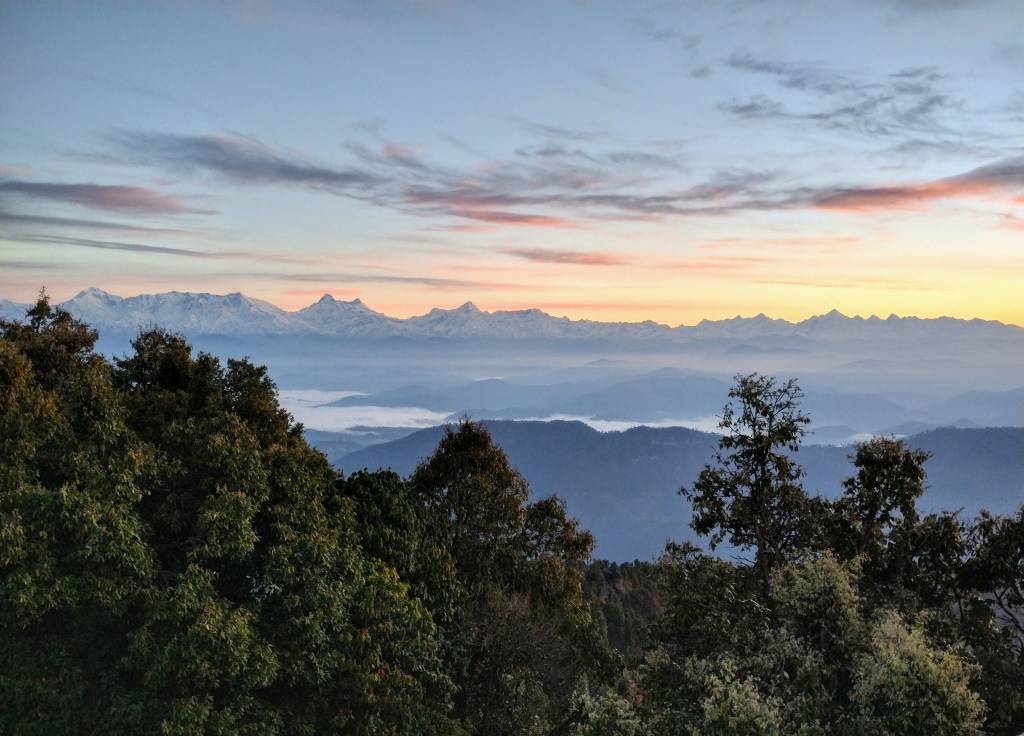
Uttarakhand is often celebrated as a spiritual haven, but beyond its temples lies a paradise of serene lakes, cascading rivers, dense forests, and towering Himalayan peaks. On our quest for quieter, less-crowded corners of this beautiful state, we set out to explore the Kumaon region — a journey that would take us from the tranquil waters of Bhimtal to the snow-kissed heights of Khaliya Top.
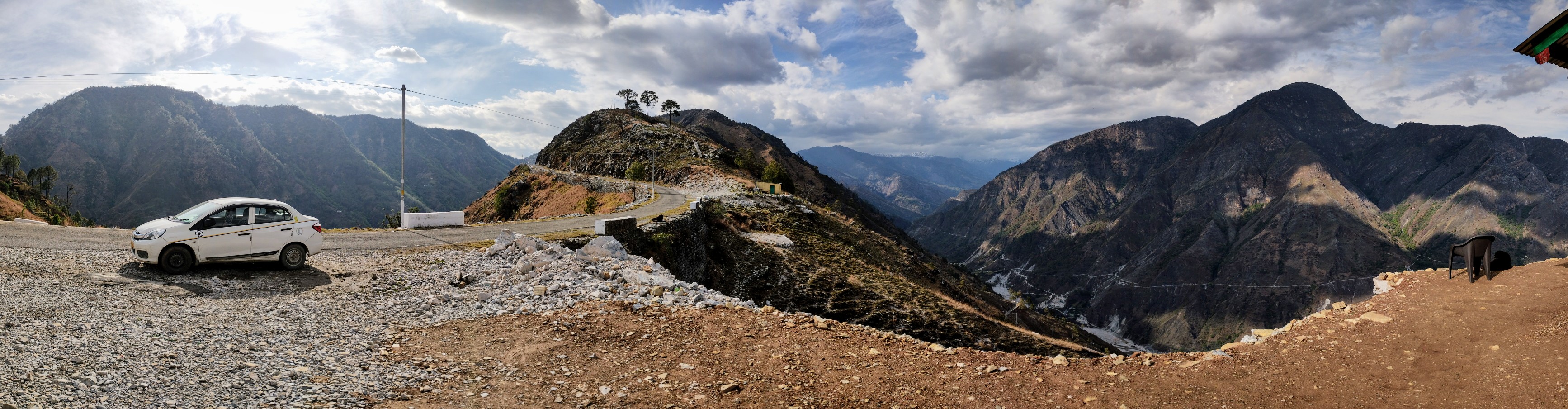
April 2023
Bhimtal – The Serene Sibling of Nainital
Instead of the bustling streets and busy lakeside promenade of Nainital, we chose Bhimtal, a quieter and larger lake in the Kumaon region. Surrounded by pine-covered hills, it felt untouched compared to its famous cousin. While Nainital dazzles with its energy, Bhimtal soothes with a calm that seeps into your soul.
The town and the lake are named after Bhima, one of the Pandava brothers from the Mahabharata. Legend says that during their exile, Bhima struck the ground with his mace (gada) to find water, and Bhimtal Lake was born. It is the largest lake in the Kumaon region.
The Bhimtal lake houses an aquarium, which you can reach by a boat. At one end, the British-built Victoria Dam stands guard, while the Bhimeshwara Mahadev Temple quietly watches over the waters. We ended our day with a peaceful rowing boat ride, the ripples glowing in the soft evening light. The silence felt like a gift we hadn’t known we needed.
Naukuchiatal – The Lake of Nine Corners
The next morning, we headed to Naukuchiatal, the deepest lake in the region, named for its nine distinct corners.
Though smaller than Bhimtal, it is no less enchanting. The still water, reflecting the surrounding hills, was a perfect moment of stillness. Here, boating is popular, and for the adventurous, there are options for paragliding, zip lining and kayaking.

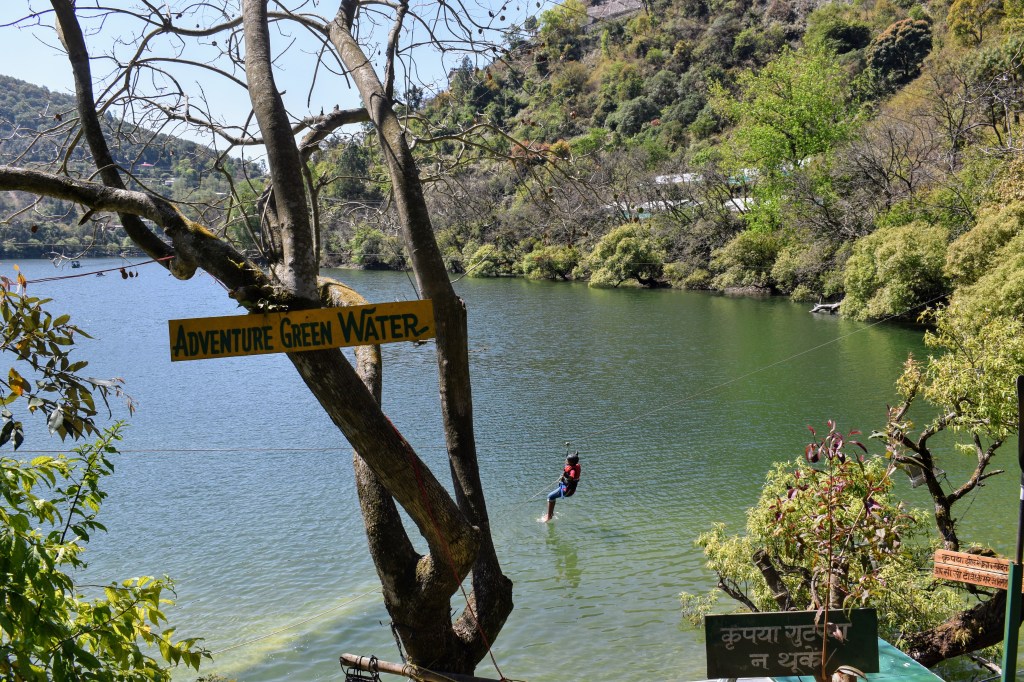
Cradled by hills, Naukuchiatal rests in a stillness that speaks louder than words
There are a total of seven lakes in Nainital district – — Naini Lake, Bhimtal, Naukuchiatal, Sattal, Khurpatal, Garurtal, and Lokhamtal. Owing to limited time, we skipped the rest.
Mukteshwar – Of Peaks and Legends
Next, we drove to Mukteshwar, home to a 350-year-old temple dedicated to Lord Shiva as the God of Liberation. It is believed that the Pandavas built this temple during their 12-year exile.
Beyond its spiritual draw, Mukteshwar rewards you with sweeping Himalayan views – Nandakot, Nanda Ghunti, Trishul, and India’s second-highest peak, Nanda Devi (when sky is clear). A short walk from the temple leads to Chauthi Ki Jali, a dramatic rock formation where Shiva is believed to have meditated. The town is surrounded by dense forests, perfect for birdwatching and slow nature walks.
Binsar – Where the Mountains Wake Up
After offering our prayers at the Mukteshwar temple, we drove to Binsar and checked into KMVN TRH Binsar, which offers one of the best sunrise views in the region. Early next morning, we stood on the terrace as the first light painted the snowy peaks —Trishul, Nanda Devi, Rajarambha, Panchachuli — in gold. It was a truly heavenly experience.

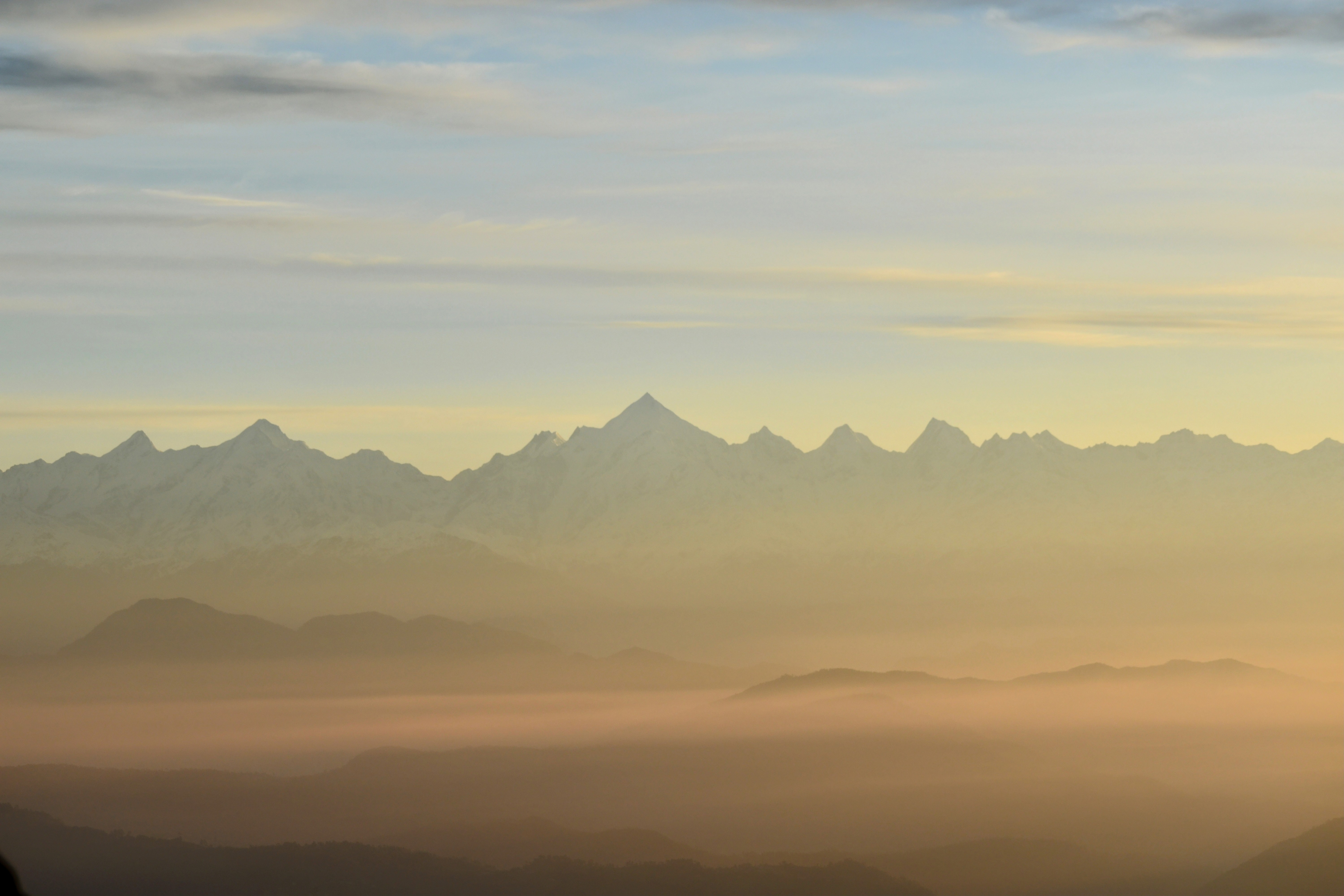
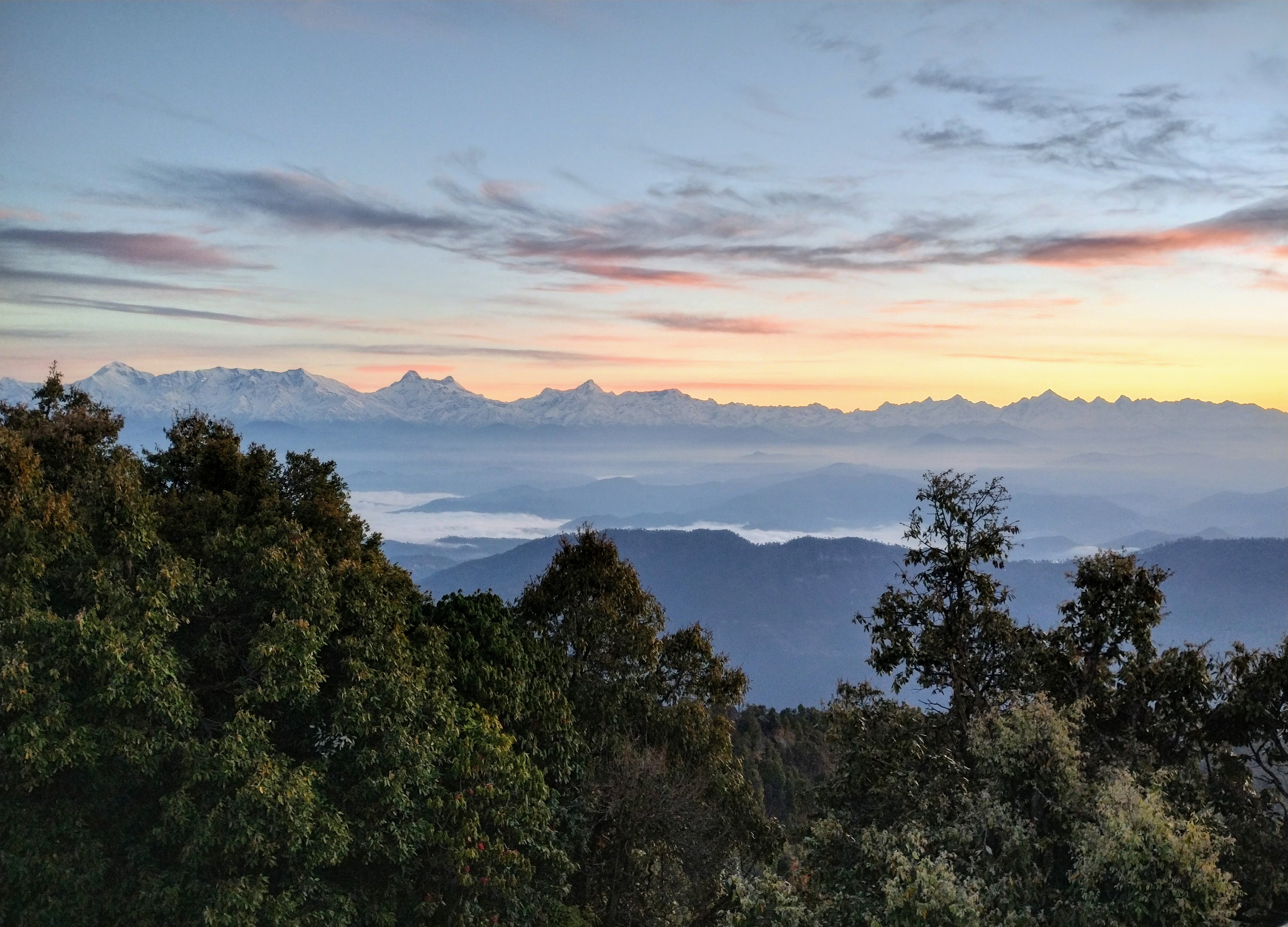
Sunrise in Binsar: Trishul, Nanda Devi, and Panchchuli bathed in light
For those who want to venture further, a 2 km trek to Zero Point winds through oak and rhododendron forests, with the chirping of birds as constant companions. From the watchtower, the Himalayas seem almost within reach.

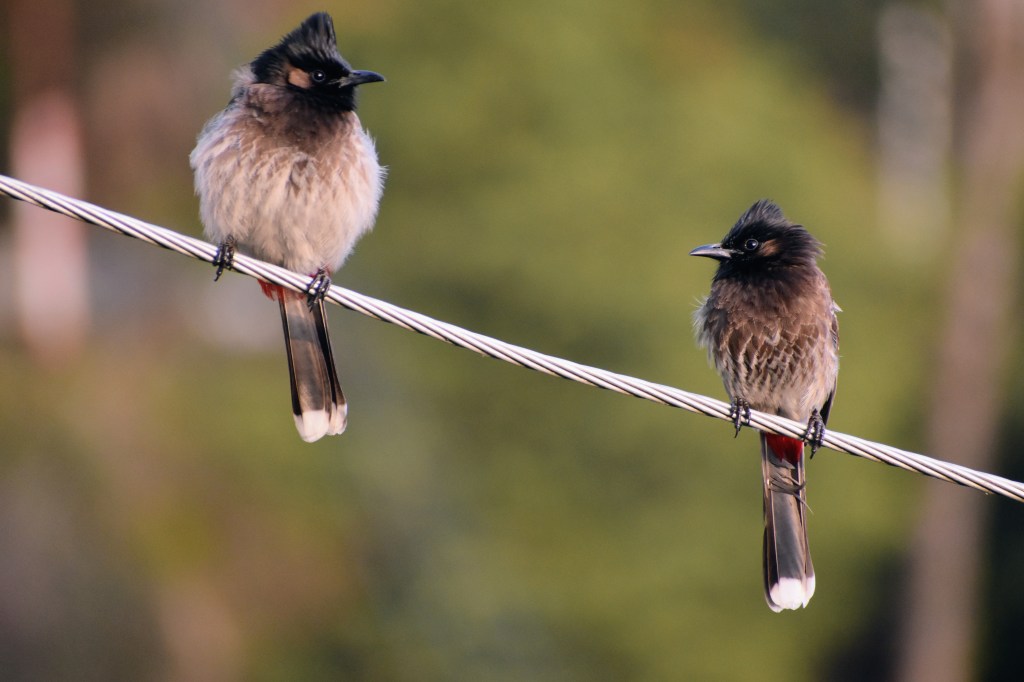
Binsar Wildlife Sanctuary is home to ghoral, kakar, wild boar, Himalayan black bears, red foxes, porcupines, and leopards — though sightings are rare. Fortunately or unfortunately, we didn’t meet any big mammals, but the birdlife was spectacular.
Munsyari- Where the Mountains Whisper
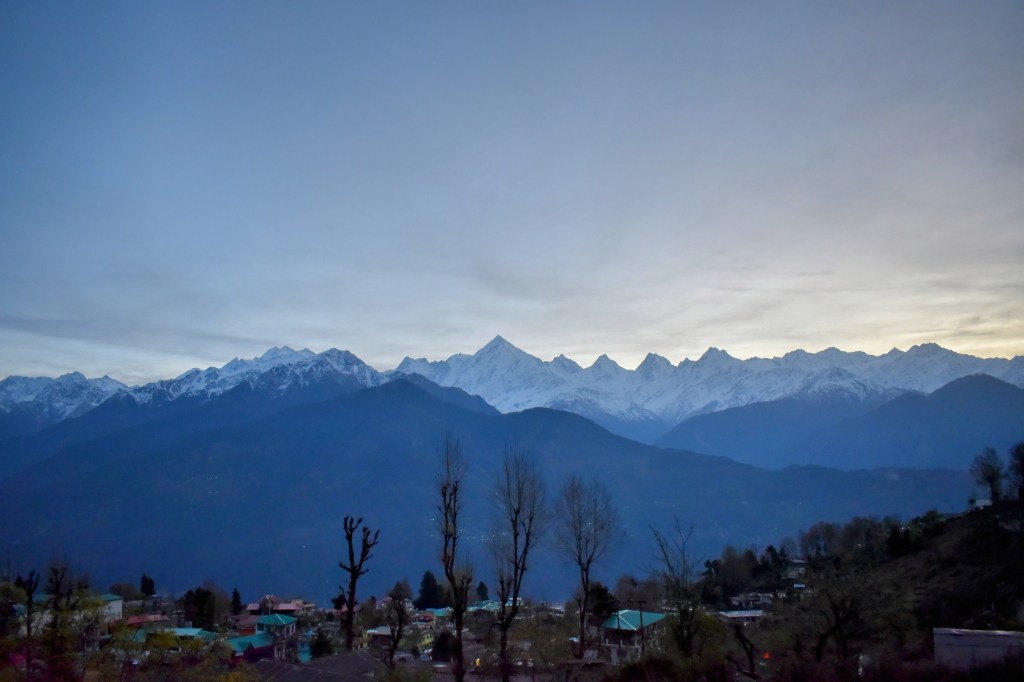
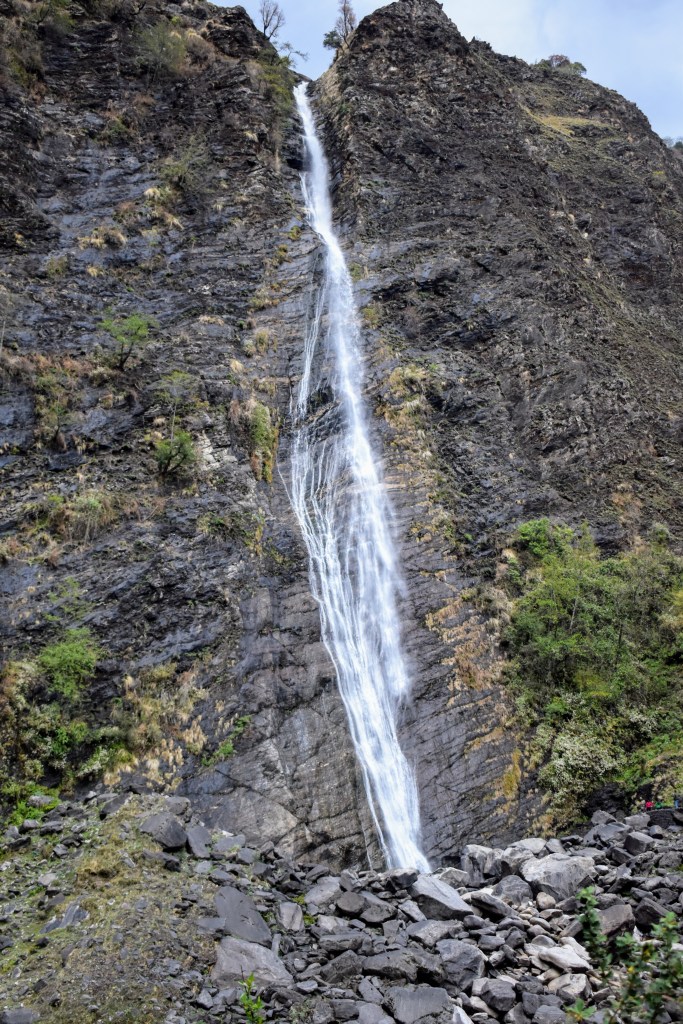
Briefly stopping to marvel at Birthi waterfalls and cherishing the route as much as we could, we reached Munsyari quite late in the evening. A small village wrapped in a soft mountain hush. Most stays in Munsyari offer unobstructed views of the Nanda Devi and Panchchuli peaks — a view so magnetic that sipping morning tea on the balcony becomes a moment you wish you could freeze in time. At dawn, it’s not an alarm that wakes you, but the gentle call of birds echoing through the valley.
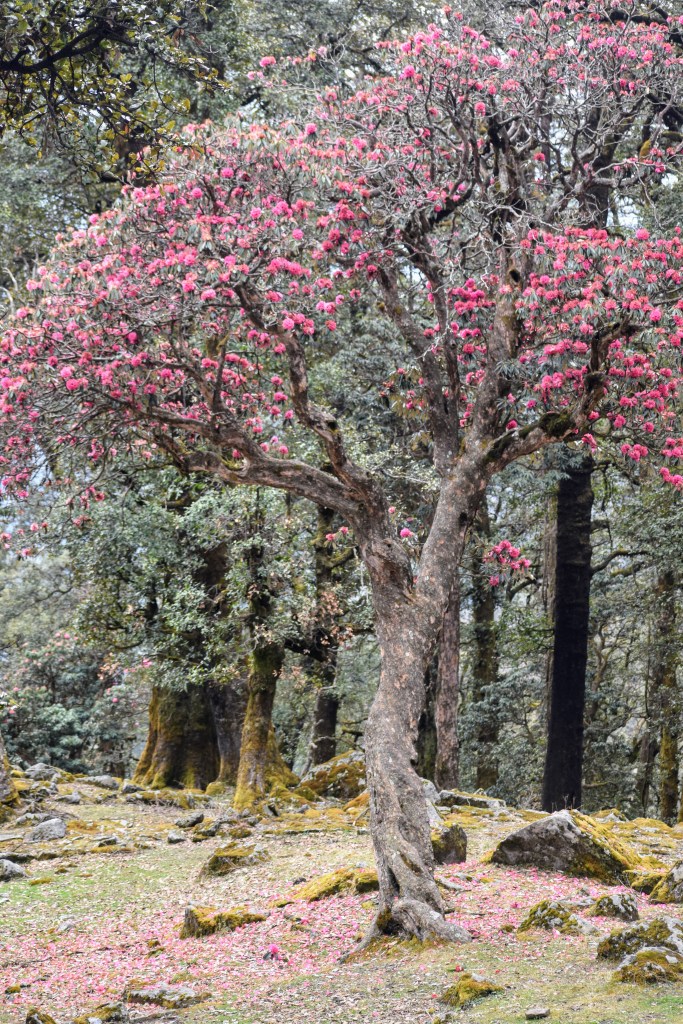
Our first full day was dedicated to forest bathing. After breakfast, we headed for Khaliya trek, a trail that feels like it was painted by nature’s own hand. Starting from Balati Bend, the path meanders through a living tapestry of oak, cedar, and rhododendrons — not just the usual crimson, but pinks and whites too, their blossoms scattered on the forest ground like nature’s confetti. The air here is crisp and pure, carrying the faint, earthy scent of damp soil.
Silence was our constant companion, broken only by the rustle of leaves or the occasional burst of birdsong. Every breath felt fresher than the last. We didn’t rush; halfway up, we stretched out on the soft grass of an alpine meadow, watching the clouds drift lazily above the jagged peaks.
The 6 km trail is an easy-to-moderate climb. It can be completed in a but an extended weekend break is better. A KMVN tourist rest house is situated about 1 km below the summit, but it’s essential to pre-book as it’s the only option.
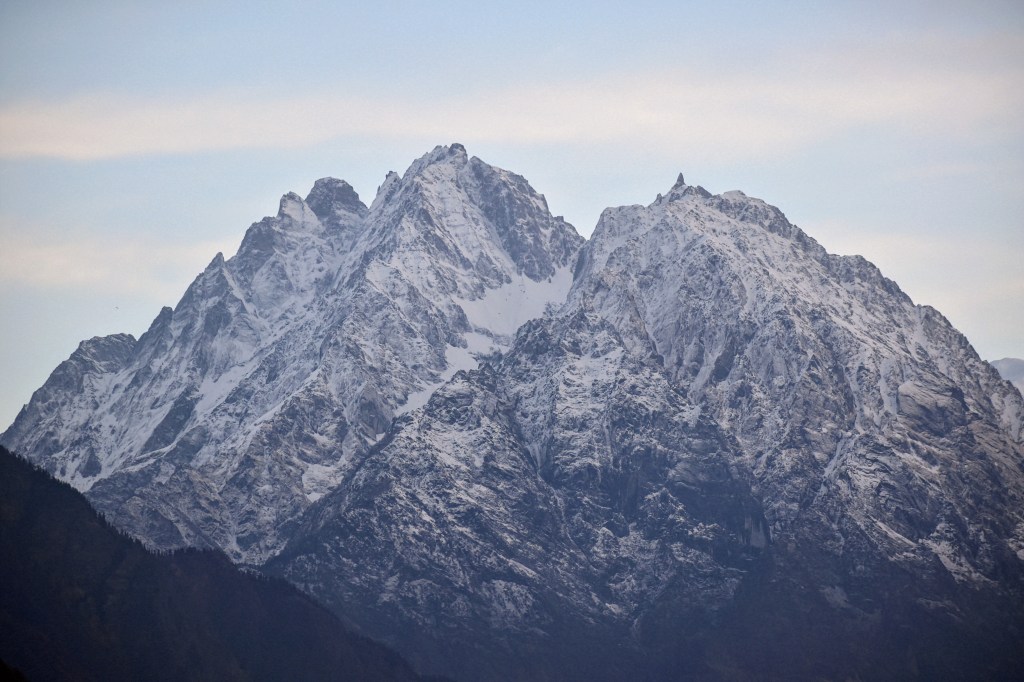
Those who trek to Zero Point are rewarded with a 360° panorama of Panchchuli, Nanda Devi, Hardeol, Nandakot, and Rajrambha—a crown of snow against the blue sky. Khaliya Top is often snow-covered, making it a winter wonderland as well as a summer escape.
On our way back, the weather shifted, and tiny pellets of sleet began to fall — my first such experience. It left me grinning like a child, as if the mountains had decided to give us a parting gift.
The following morning, we visited the Nanda Devi Temple — not just a place of worship, but a sanctuary in itself. Perched on a mountain top, it offers an unhindered, breathtaking view of the Panchchuli peaks, so close you feel you could almost touch them. The temple radiates a peaceful divine energy that makes you lose track of time. Simply stand there and breathe it all in.

In Munsyari, time slows — and in that stillness, you find a kind of peace that the busier hill stations can rarely offer. Munsyari may be small, but its charm is immense — an innocent village where the beauty of nature and the richness of local culture flow together effortlessly. Here, even doing nothing feels like a precious experience.
Chaukori – Tea Gardens & Buransh Jam
After breakfast we bid farewell to the paradisiacal hillstation Munsyari, and proceeded for Kausani. On the way we paused at Chaukori to see Uttarakhand’s emerald tea gardens roll down the hillsides. Here, we bought Buransh (rhododendron) jam and Buransh tea— a taste of Kumaon to take home.
Enroute Kausani, we offered prayers at Baijnath and Bageswar temples [for detailed description of these temple visit 12 Must-Visit Temples in Uttarakhand Beyond Char Dham] and traversed through some of the most scenic routes of Uttarakhand. Along the way, I picked up a few large sized pinecones — small tokens of a mountain road.
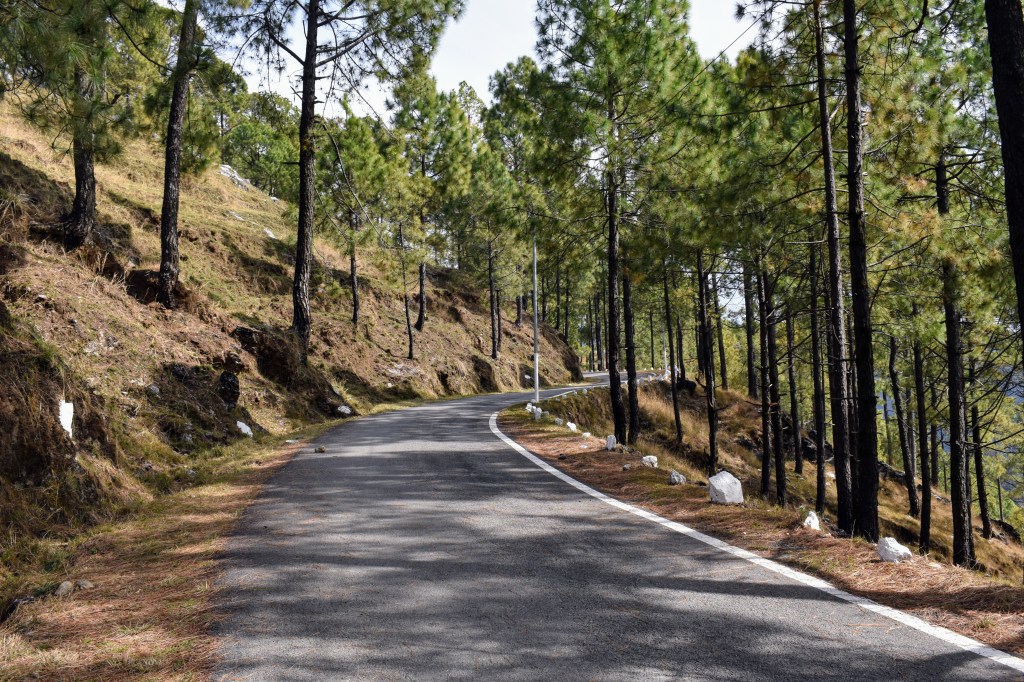
Kausani- Where the Soul Finds Its Pause
By the time we reached Kausani, the pace of our journey had slowed to match the gentle rhythm of this serene hill station. Often called the Switzerland of India, Kausani greets you with a sweeping panorama of the Trishul peaks. We were lucky to witness them glowing at sunset.
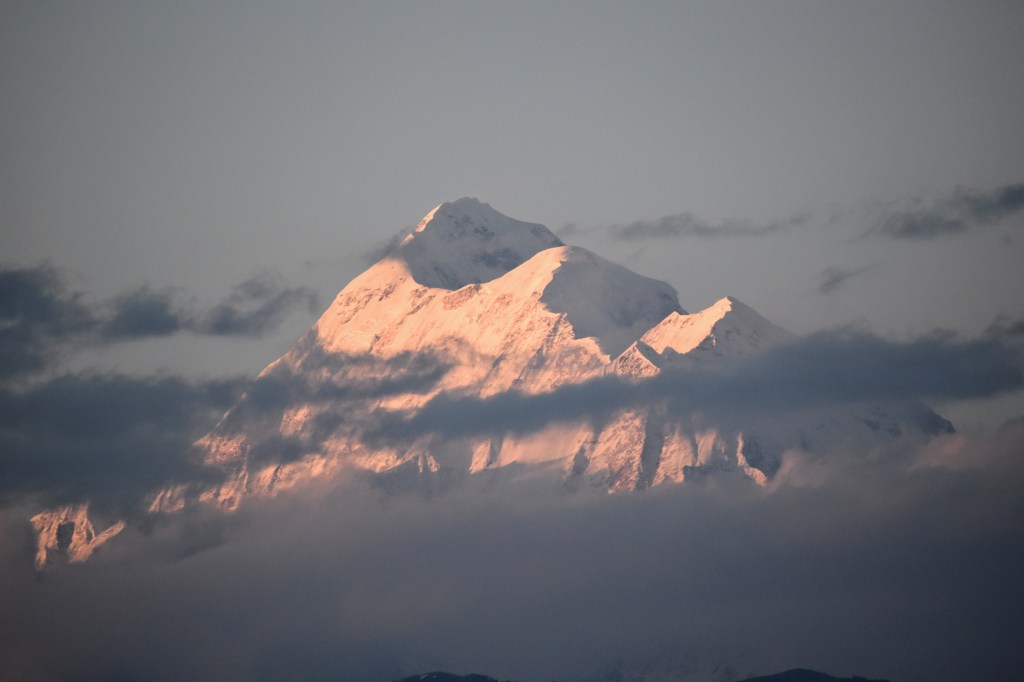
There’s something deeply restorative about Kausani. Days here begin and end with golden light spilling over the mountains, the cool breeze carrying the scent of pine and tea leaves from the surrounding estates. We wandered through tea estates, visited a shawl factory where artisans worked with patient precision, and spent hours simply sitting on our balcony, letting the mountains work their quiet magic. In that unhurried rhythm, you find yourself renewed — the perfect way to end a journey.
Where to stay and what to eat?
Well, in this tour there is no dearth of accommodation in all places except for Binsar and Khaliya. KMVN Tourist Rest House is available in most destinations including Bhimtal, Naukuchiatal, Mukteshwar, Binsar, Chaukori, Munsyari, and Kausani.
As for food, most towns have a range of options. Be sure to try local Kumaoni dishes and seasonal produce like Buransh juice, Bal Mithai, mandua roti, Dubki and other seasonal kumaoni dishes.
How to reach?
· Nearest Railway Station: Kathgodam
· Nearest Airport: Pantnagar (70 km from Nainital)
· Nearest Bus Stand: Haldwani, with services to Delhi, Dehradun, Jaipur, Chandigarh, Haridwar, and more. (check here: https://utconline.uk.gov.in/busServices.aspx?servicetypeid=10)
· Local buses for tours within Kumaon circuit are also available from Haldwani bus stand and Kathgodam bus stand. Taxis can be found at Kathgodam railway station.
Best time to Visit
* Spring (March–June): Clear skies, blooming rhododendrons.
* Autumn (Sept–Oct): Pleasant weather, post-monsoon freshness.
* Winter (Dec–Feb): Snow in higher reaches, but be prepared for extreme cold.
Itinerary
Here’s a sample concise itinerary:
Day 1: transfer to Nainital/Bhimtal from Kathgodam railway station/Pantnagar airport. Enjoy boating experience.
Day 2: Sightseeing of 7 lakes of Nainital district Day 3: Visit Mukteshwar dham on the way to Binsar.
Day 4: Wake up early to experience a dazzling sunrise from Binsar. Hike to zero point. If you have time, visit Patal Bhuvaneshwar. Then drive to Chaukori to visit the lush tea gardens of Uttarakhand. You may as well prefer a night halt in Chaukori.
Day 5: Early morning drive to Munsyari. Begin your trek for Khaliya TRH.
Day 6: Wake up as early as possible for trek to Khaliya top zero point. Return back to Munsyari.
Day 7: Visit Nanda Devi temple. Transfer to Kausani. Enroute visit Baijnath and Bageswar temple.
Day 8: Visit tea estates in Kausani and spend a relaxing day.
Day 9: Depart for airport/railway station
Final Thoughts
Travel through the Kumaon circuit is more than just a checklist of destinations — it’s a slow, ongoing conversation with the mountains. But do not forget that we are only guests here. Respect the land, Respect the rhythms of nature, understand their limits, tread lightly, and leave no trace. Avoid littering, honour local customs, and follow any restrictions set by the community or authorities.
If we keep our footprints gentle, these places will keep their magic for generations to come.


 Ayantika Malakar
Leave a comment