
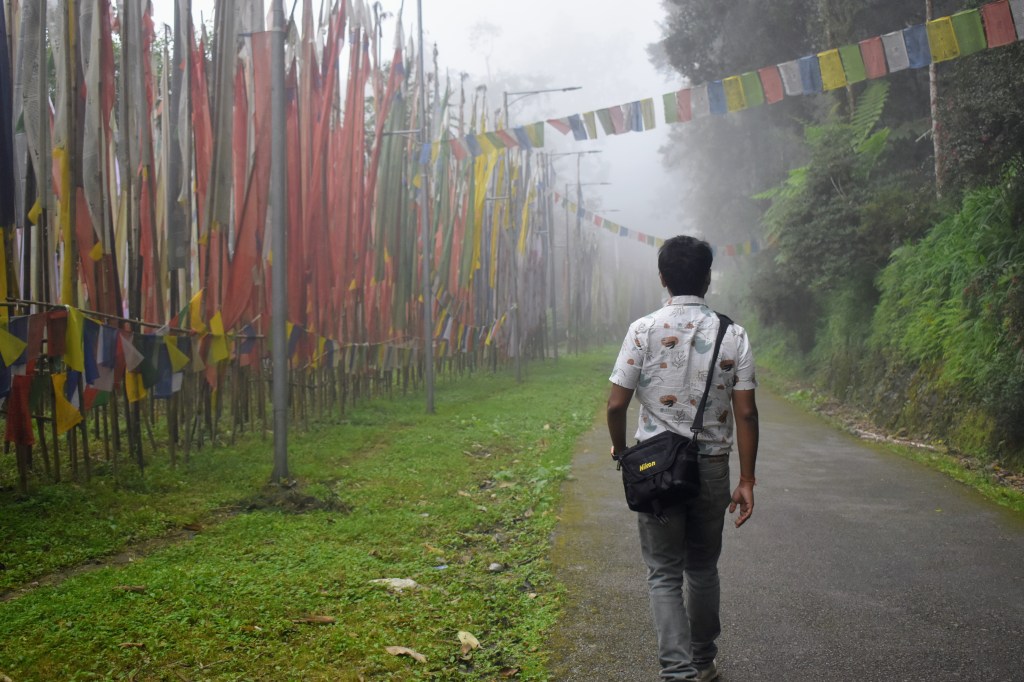
Sikkim is often considered an expensive Himalayan getaway—but with a bit of planning, you can explore its breathtaking beauty on a modest budget while traveling sustainably. In this blog, I’ll share how my husband and I spent five unforgettable days in Pelling, Ravangla, and Namchi— within ₹20,000 for two people.
Weary from Kolkata’s relentless summer, my husband and I craved cool air, the peaceful vibes, and the stunning scenery. We answered that craving with a spontaneous trip to Sikkim. The charm of Sikkim lies in its majestic Kanchenjunga views, serene villages, friendly locals, and authentic experiences. We picked offbeat Pelling, Ravangla, and Namchi. These towns are peaceful, less crowded, and ideal for slow travelers. Our challenge: do it all on a tight budget.
To our delight, a trip through Pelling, Ravangla, and Namchi in September turned out to be not only possible but also deeply rewarding and sustainable. Here’s our story, filled with travel tips for anyone dreaming of Sikkim on a budget without compromising on experiences.

Pelling – Gateway to unhindered Kanchenjunga Views
Imagine opening your window at dawn to find Mount Kanchenjunga glowing gold against the morning sky. That’s Pelling for you—a small town perched in West Sikkim that offers some of the best Himalayan views without the chaos of big hill stations.
The moment we reached, the air felt different—cool, pure, and refreshing. As the sun dipped behind the ridges, the town wrapped itself in a hush, broken only by prayer flags fluttering and the occasional sound of bells from distant monasteries. In September, the tourist crowds were thin, making it a peaceful retreat. We stayed in Upper Pelling for the best views of the “sleeping Buddha,” the local name for the breathtaking Mount Kanchenjunga and its neighboring peaks. That evening, as we strolled along the misty lanes of Upper Pelling, the scent of pine mingled with the aroma of fresh momos sizzling on a street-side stove. We savoured a simple plate of steaming hot momos that warmed both body and soul.
The next morning, Pelling gifted us its crown jewel—the Sleeping Buddha formation glowing in golden sunlight. No photograph could do justice to the sheer magnificence of that view.

Pelling’s must-sees:
Beyond the sunrise, Pelling is full of experiences.
Pelling Skywalk & Chenrezig Statue : India’s first glass-bottomed skywalk, giving a thrilling view of the valley. At the heart of the complex stands the 137 ft Chenrezig statue, the Bodhisattva of Compassion. The combination of thrill and spiritual ambiance is unforgettable.
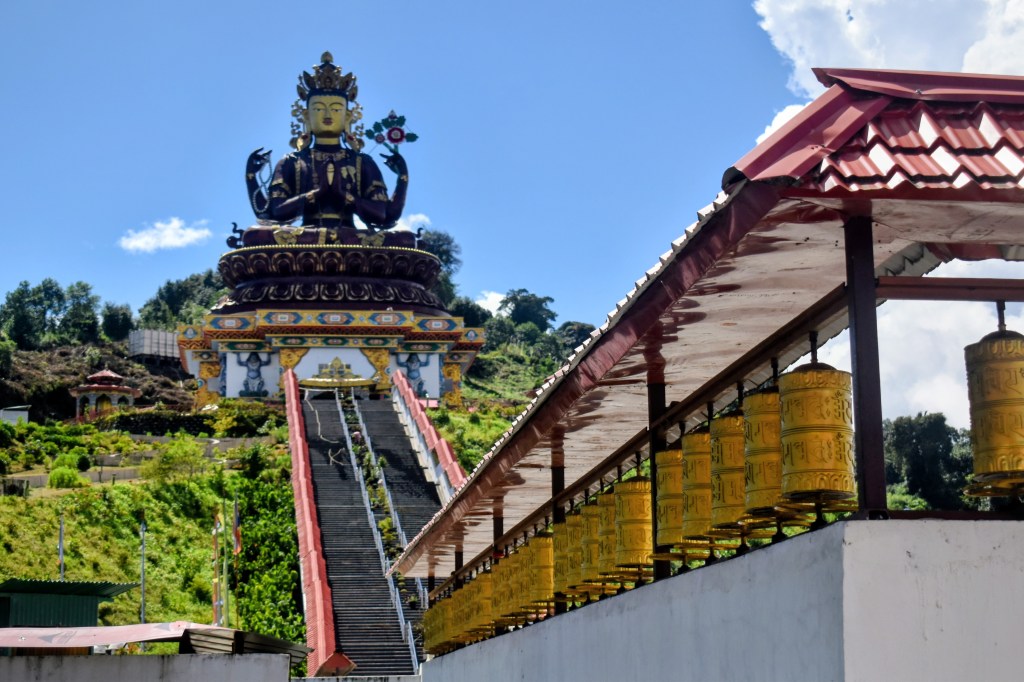

Pemayangtse Monastery – One of Sikkim’s oldest monasteries, housing rare thangkas, murals and a museum showcasing various commodities used in the 17th century by Tibetan lamas.
Rabdentse Ruins & Sidkeong Tulku Bird Park – A short forest hike leads to the ruins of Sikkim’s former capital. Misty days make it feel almost dreamlike. The surrounding forest is an avian sanctuary, with unique birds to spot. The site offers a glimpse into Sikkim’s rich history and, on a clear day, views of the Singalila range.

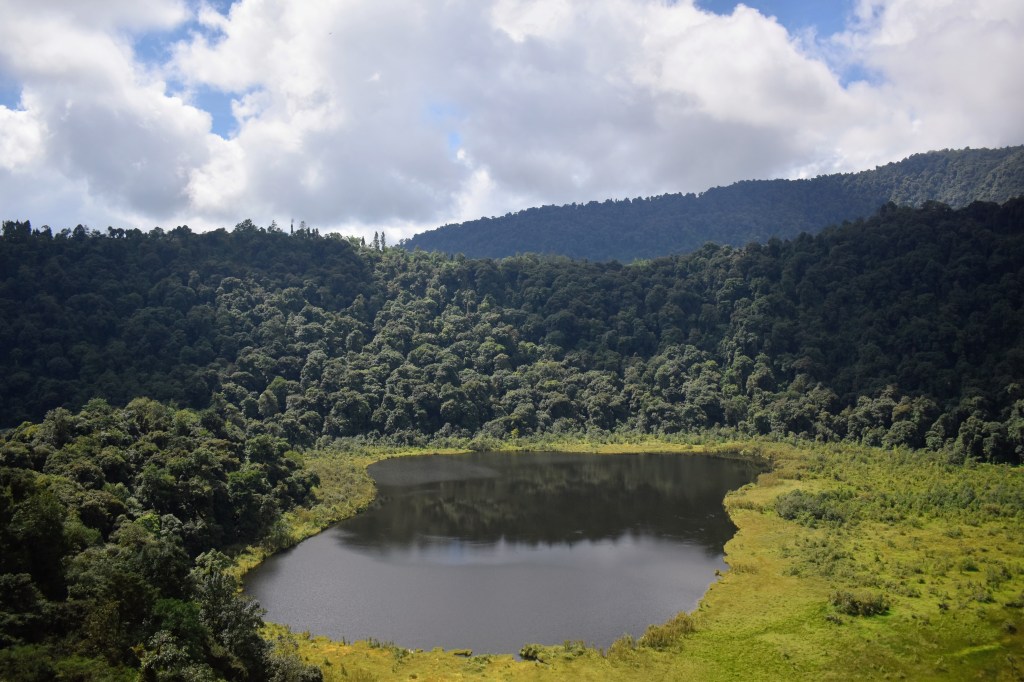
Khecheopalri Lake – About 20 km from Upper Pelling, this sacred lake is revered by both Buddhists and Hindus. A short hike leads to a viewpoint showing the lake’s unique shape, resembling the left foot of Lord Shiva. Remember to respect its sanctity and keep the area pristine.
Rimbi Waterfall – En route to Khechopalri, this waterfall crashes down rocky cliffs with vigor—a marvelous sight during September. Pelling was serene and soulful.
Ravangla – The Town of Buddha Park
From Pelling, we traveled to Ravangla (also called Rabong), a small but vibrant town in South Sikkim. Perched on a ridge, Ravangla is blessed with crisp mountain air and a spiritual aura that seems to embrace every visitor.
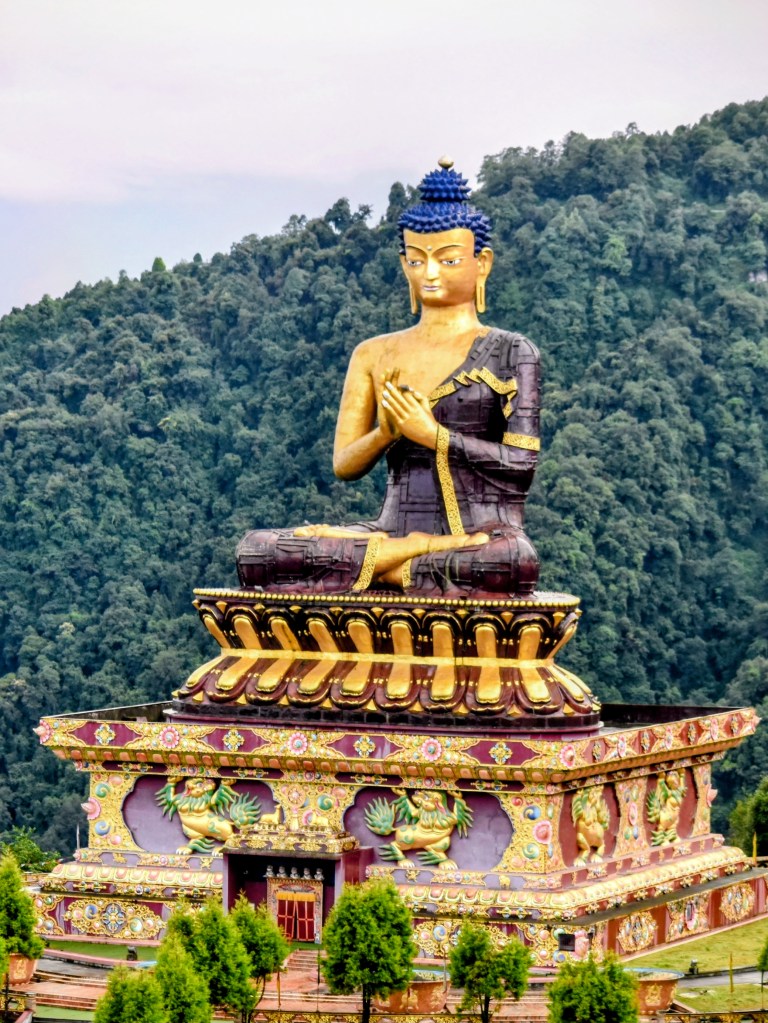
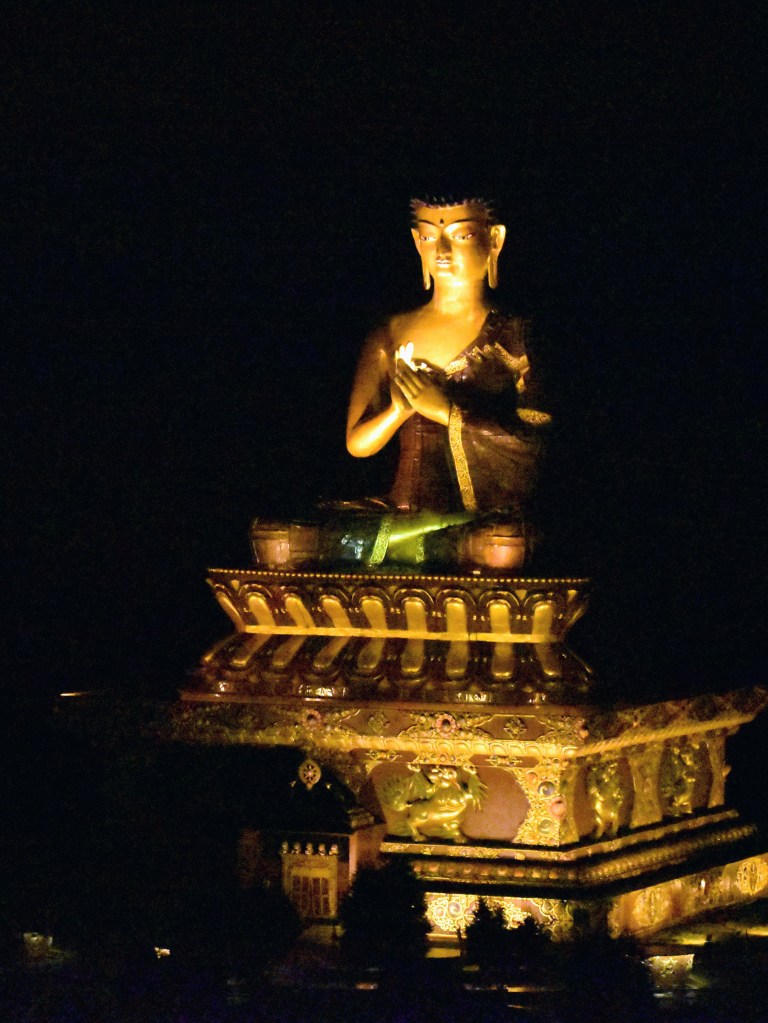
Ravangla’s prime attraction is the Buddha Park (Tathagata Tsal), where a 130-foot golden statue of Lord Buddha rises gracefully against a backdrop of snow-clad peaks. Walking inside the spiraling gallery beneath the statue, we traced the story of the Buddha’s life. Outside, manicured gardens and prayer wheels created an atmosphere of serenity. Time seemed to pause as we sat quietly, gazing at the Buddha framed by Himalayan ranges—a scene straight out of a painting.

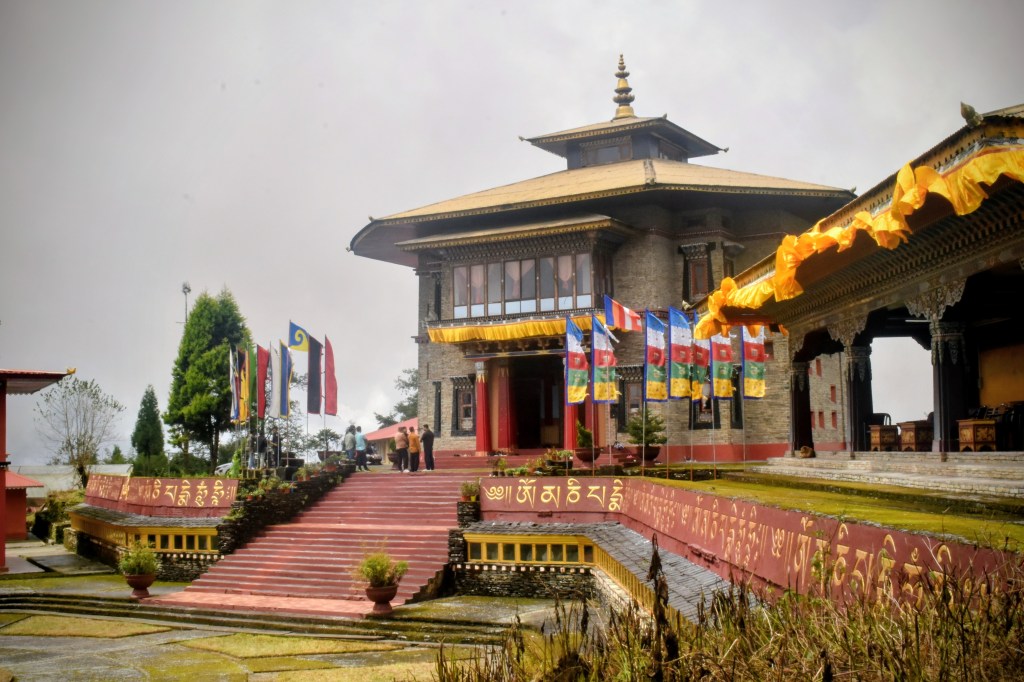
Nearby, the Rabong Monastery (Mane Choekhorling Gompa) buzzed with preparations for the Pang Lhabsol festival, a colorful celebration honoring Mount Kanchenjunga, the guardian deity of Sikkim. Though bad weather kept us from visiting the famed Ralong Monastery, the drive through misty valleys and green hills more than made up for it.
On the way to Namchi, we visited the Temi Tea Garden, Sikkim’s only tea estate. Its emerald slopes rolled endlessly into the horizon. Walking along the garden’s pathways felt like stepping into a living postcard.

Ravangla felt different from Pelling—more energetic, yet deeply spiritual. Staying at a local homestay overlooking the Buddha Park was one of the highlights of our trip.
Namchi – Spiritual hub of South Sikkim
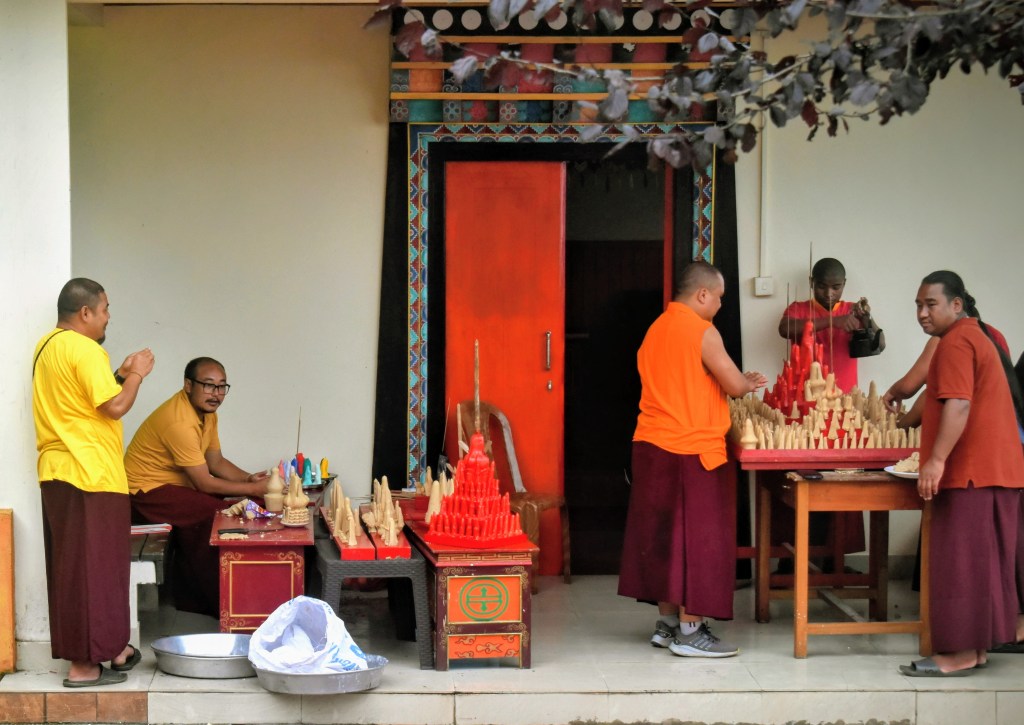
Our final stop was Namchi, the spiritual and administrative heart of South Sikkim. The world’s tallest statue of Guru Rinpoche (Padmasambhava) stands atop Samdruptse Hill, offering a sense of peace and positive energy. From the monastery, we saw Namchi town below. Monks were crafting intricate Tormas (ritual flour-and-butter sculptures) for Pang Lhabsol festival, giving us insight into local traditions.
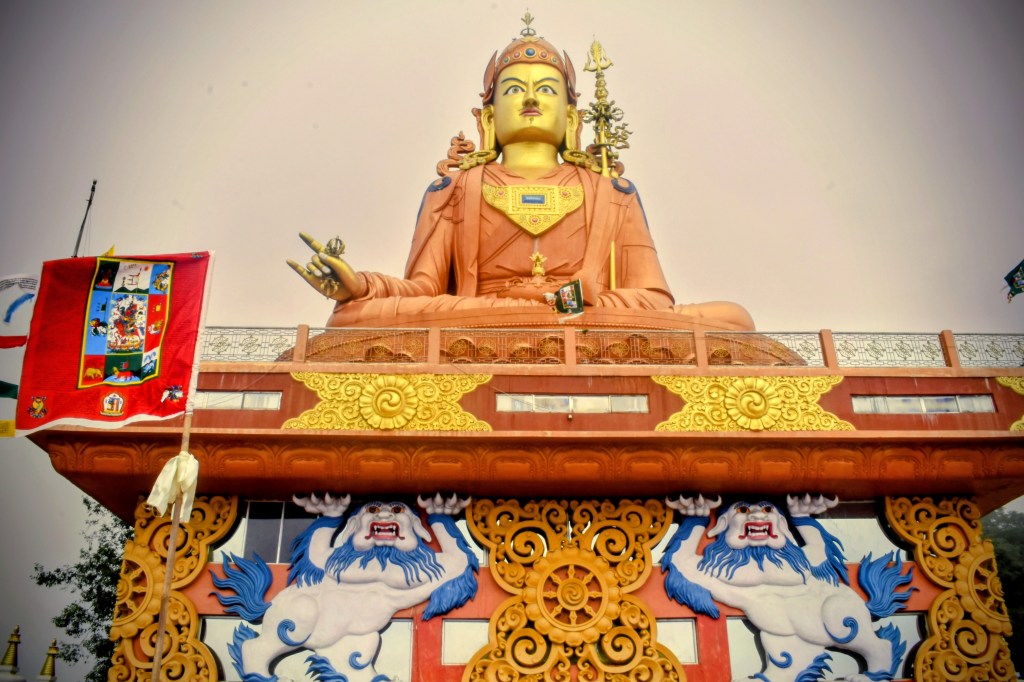
The highlight of Namchi for us was the Siddheswar Dham, a massive temple complex with a 108-foot statue of Lord Shiva, surrounded by replicas of the 12 jyotirlingams and the four dhams of India. It was a marvel of faith and architecture. The newly built Sai Temple surrounded by lush gardens added another peaceful stop.

Beyond temples and statues, Namchi also has a touch of modernity. The Bhaichung Bhutia Stadium and the central park reflect the town’s contemporary pulse, yet what lingers most are the spiritual vibrations carried in the mountain air.
Through this tour, we glimpsed Sikkimese culture, marriage rituals, and village life. It struck us how different life in the hills is compared to that of city dwellers like us. Yet, there’s a fascinating irony—each side believes the other has it better.
In cities, we are burdened with stress, long commutes, and adulterated food. We dream of owning a small farm, tending to livestock, waking up to bird calls, eating fresh meals, and sleeping early. Meanwhile, villagers long for the excitement of city life—9-to-5 jobs, malls, and cinema halls. It’s the timeless paradox of human longing: everyone yearning for a life that isn’t theirs.
Itinerary
Here is our Sikkim budget tour itinerary, designed for maximum experience and minimum expense.
Day 1: Reach New Jalpaiguri/Bagdogra and take a shared taxi to Pelling. Settle into your hotel in Upper Pelling and enjoy the quiet surroundings.
Day 2: A full day of sightseeing covering Khecheopalri Lake, Rimbi Waterfall, Pelling Skywalk, Sanghak Choeling Monastery, Yamthang Farms, Pemayangtse Monastery, and Rabdentse Ruins.
Day 3: After an optional stop at Singshore Bridge, take a shared taxi to Ravangla. Check into a homestay and spend the evening at the magnificent Buddha Park.
Day 4: A day trip covering Buddha Park, Rabong Gompa, Temi Tea Garden, and the key sights of Namchi: Samdruptse, Siddheswar Dham, and Sai Temple.
Day 5: Take a shared taxi from Namchi to Siliguri for your return journey.
I recommend following the sequence Pelling → Ravangla → Namchi. Here’s why: Pelling is the farthest point, about a 6–7 hour drive from Siliguri. If you leave it for the end, you might struggle to catch your return train or flight because of unpredictable Siliguri traffic. On the other hand, Ravangla is just 4 hours away, and Namchi only 3 hours—making the return journey far more convenient and stress-free.
Travel Costs (for 2 people)
- Shared taxis (total): ~₹3,000-3,200
- Sightseeing taxis: ~₹4,800 (off-season rates)
- Hotels & Homestays: ₹6,700 (4 nights)
- Food & water: ₹3,500
- Entry tickets & parking: ₹1,500 approx.
Total ≈20,000

Making Sikkim Affordable & Sustainable
Travel is a privilege, and with it comes a responsibility to protect the places we visit. Here’s how we kept our trip budget-friendly and eco-conscious:
- Shared Transportation: Instead of booking a private cab for the entire journey, we relied on shared taxis and buses for transfer between towns. This significantly cut down our travel cost and carbon footprints. It’s also a fantastic way to meet locals and other travelers.
- Support Local: Staying in homestays and hotels run by locals allowed us to support local families directly.
- Reduce Food waste: We savored traditional dishes from local eateries which is not only delicious but also a great way to support the local economy and reduce food waste.
- Minimize Plastic Waste: Sikkim is making great strides in plastic reduction. We carried our own reusable water bottles and refilled them wherever possible. We also used cloth bags for shopping and avoided single-use plastics. By carrying all our waste back and using designated bins, we helped preserve their natural beauty.
- We traveled in September, which is the shoulder season. It helped reduce accommodation and travel costs, while offering pleasant weather and minimal crowds.

How to Reach?
From New Jalpaiguri Railway Station (NJP) or Bagdogra Airport, head to the Siliguri SNT Bus Stand. It’s located 300 metres from the Tenzing Norgay Bus Terminus. Right in front of the SNT stand, you’ll find the shared taxi stand, offering services to most destinations in Sikkim, including Gangtok, Rangpo, Pelling, Geyzing, Namchi, Ravangla, and Jorethang.
- From Jorethang, taxis connect to Pelling, Geyzing, Ravangla, Gangtok, Singtam, Rangpo, Lingtam, and Siliguri.
- From Geyzing, you can get taxis to Pelling, Ravangla, Namchi, Singtam, Gangtok, and Siliguri.
- From Ravangla, shared taxis run to Singtam, Namchi, Gangtok, Geyzing, and Siliguri.
- From Namchi, shared taxis are available for Ravangla, Geyzing, Siliguri, Gangtok, and Jorethang.
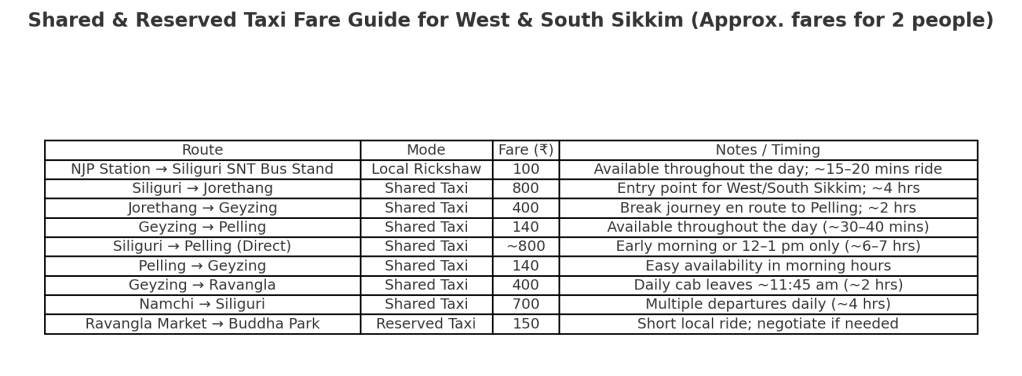
In addition, buses to Geyzing, Namchi, Pelling, and Gangtok are available from the SNT bus stand itself.
For local sightseeing, we had wonderful experiences with two drivers:
- Mr. Itma Limbo (+91 80168 79255), who drove us around Pelling with a cheerful spirit.
- Mr. Anil Gurung (+91 95932 75198), who guided us through Namchi with courtesy and skill.
Both were professional, warm, and highly recommended if you’re looking for reliable local drivers.
Where to Stay & What to Eat
Pelling offers plenty of accommodation options across Upper, Middle, and Lower Pelling. I personally recommend staying in Upper Pelling, as it gives the most spectacular views of Kanchenjunga—especially at sunrise. (Pro tip: set your alarm early; the golden glow on the peaks is worth it!) For those who love immersive stays, homestays can be found in Lower Pelling, Darap village, Yuksom, and even near the Khecheopalri Lake viewpoint.
Dining in Pelling turned out to be a simple yet heartwarming experience. Since many restaurants were closed during our visit, we relied on the homely meals served at our hotel—and they did not disappoint. One morning, we were served a bowl of freshly made thukpa for breakfast—subtle in flavor, warm, and incredibly comforting in the cool mountain air. And of course, no Sikkim trip feels complete without savoring steaming hot momos from the local street-side stalls.
In Ravangla, you’ll find both hotels and homestays to suit different budgets, most clustered around the Ravangla Market. My top pick, however, is to stay near the Buddha Park, where the glowing night view of the giant Buddha statue is simply unforgettable. At Buddha View Homestay (+91 95932 75198), our hosts treated us to wholesome home-cooked meals—chicken curry, dal, fresh vegetables, and even Sishnu (stinging nettle soup), a nutritious local delicacy. If you prefer quiet and solitude, you might enjoy staying at Temi Tea Estate or in nearby villages like Borong, Barfung, or Kewzing.
Namchi has a fair share of decent hotels too. The only challenge we faced was with dinner—most eateries shut down after 7 PM, and many hotels don’t operate their kitchens regularly. We ended up walking over a kilometer to find food, so it’s best to plan meals in advance if you’re staying here.
Final Thoughts
Sikkim doesn’t have to be expensive. With shared cabs, local homestays, and smart planning, you can enjoy its stunning peaks, spiritual retreats, and vibrant culture—all on a budget. From the Kanchenjunga sunrise in Pelling to the serene Buddha Park in Ravangla, and the prayer-flag-lined paths of Namchi, this 5-day itinerary proves that memorable travel can be affordable, meaningful, and eco-friendly.


 Ayantika Malakar
Leave a comment