
Kashmir, with its enchanting landscapes, opens a door to another world. A world where nature whispers its secrets through the rustling of leaves, the misty morning fog, and the quiet ripple of water. In autumn, the capital city, Srinagar becomes a canvas painted in coral hues, where every corner of the land tells a story of beauty, mystery, and change. The Chinar trees, in their fiery hues, line the roads as if nature itself has dipped its brush in gold and crimson. Each leaf that falls from their branches is a reminder of the inevitable passage of time, of a season that quietly transitions into winter. The distant mountains stand tall, their outlines softened by a misty haze, while the crisp, cool breeze from Dal Lake wraps you in a touch of magic.
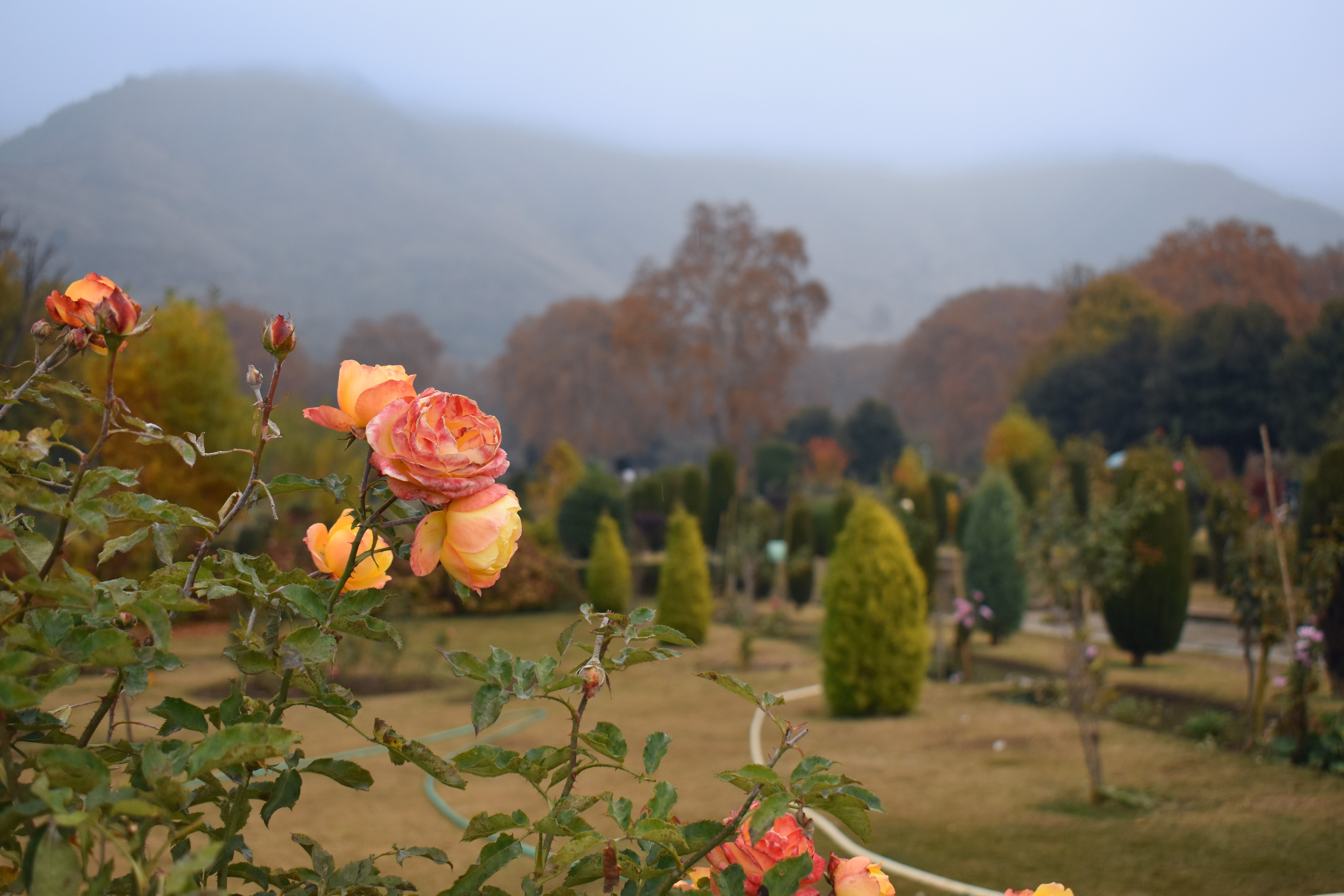
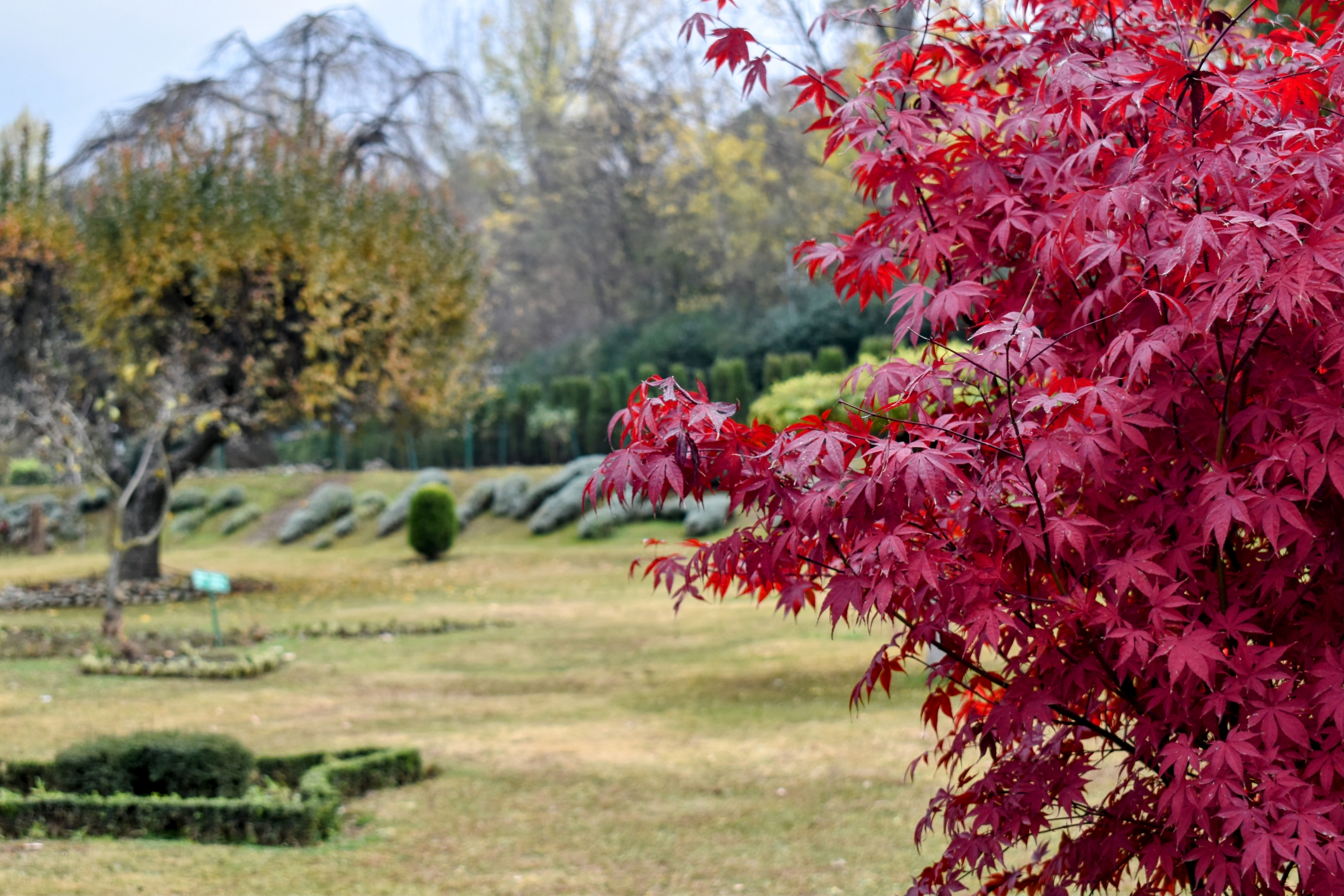
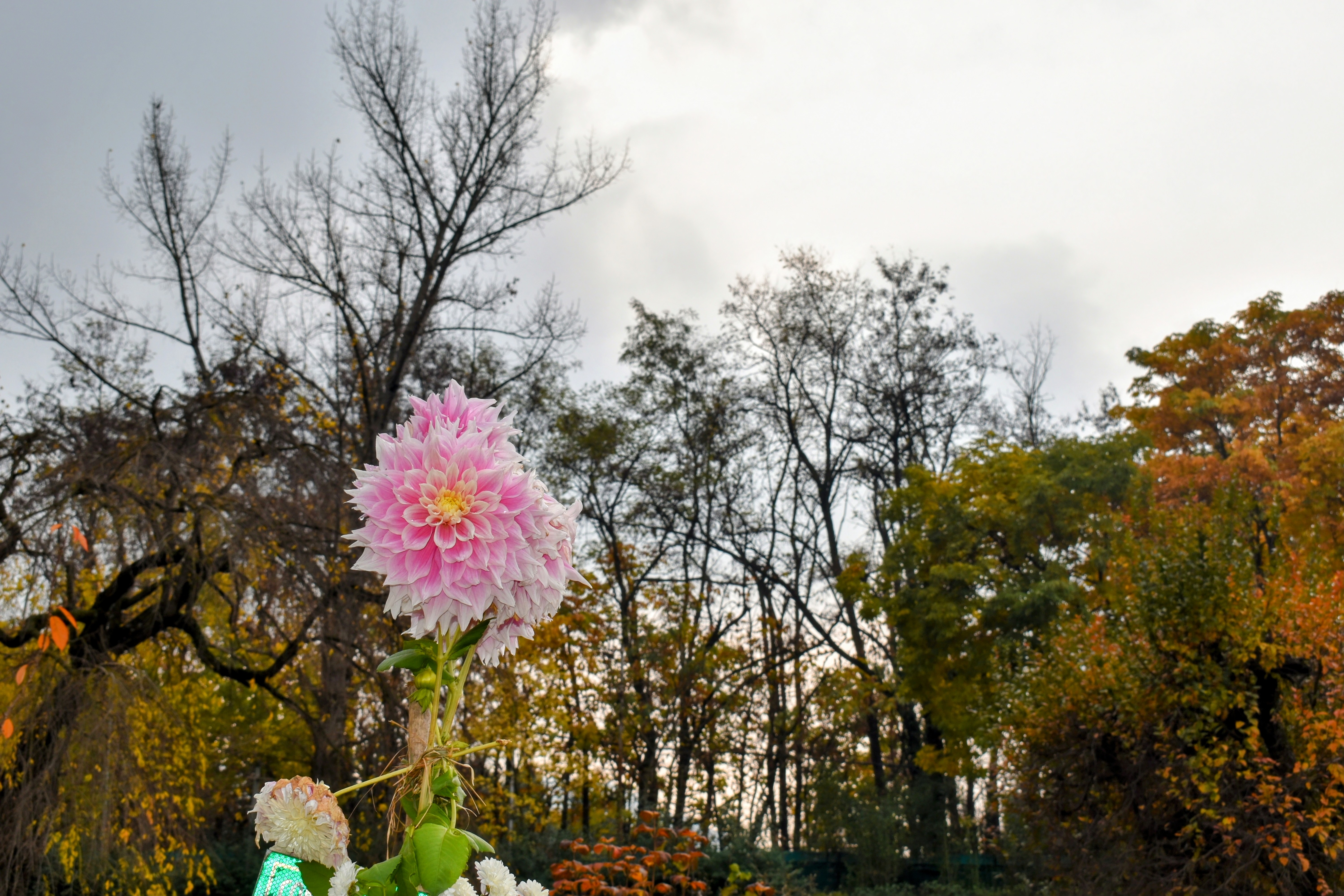
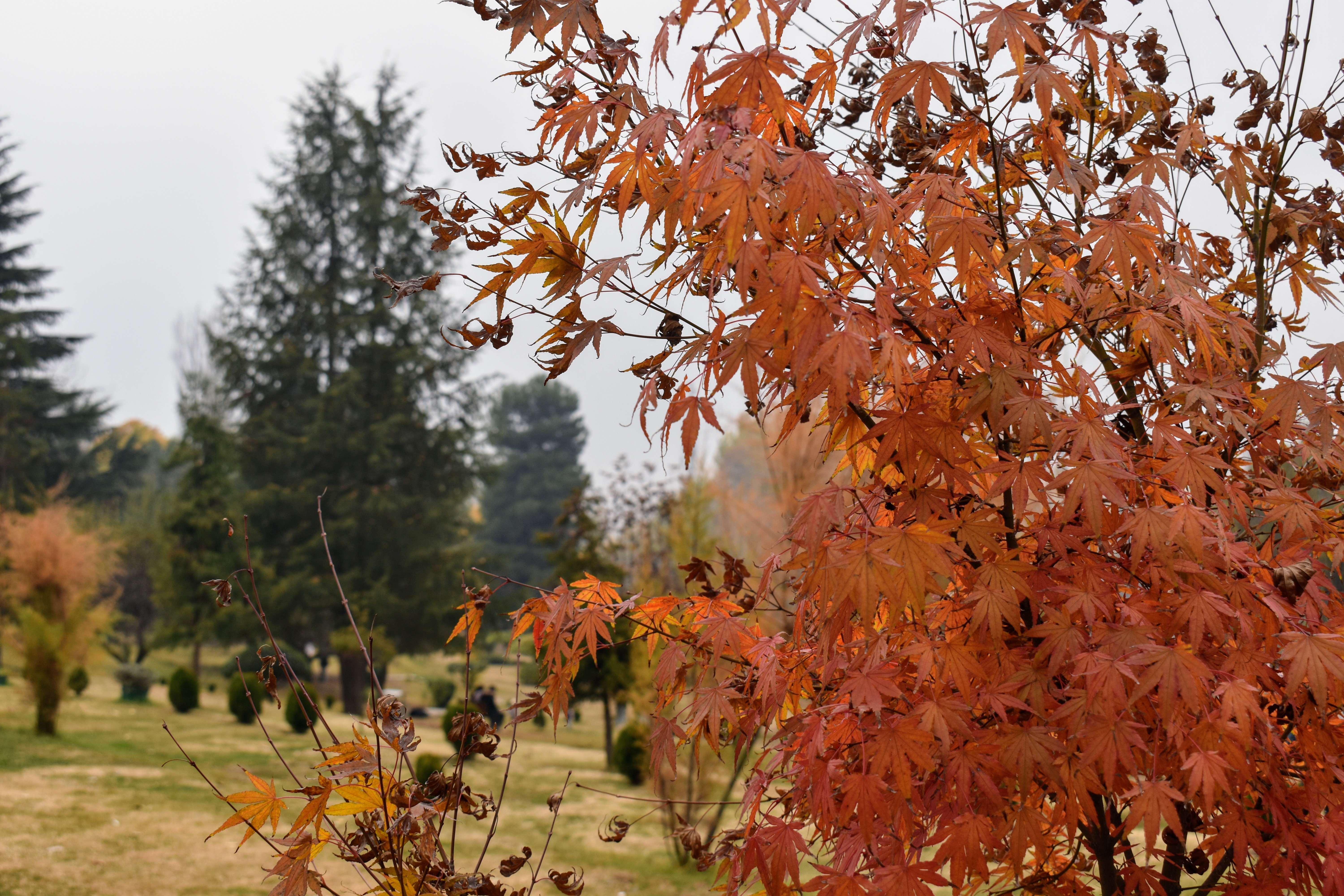
Discover the breathtaking beauty of Srinagar in autumn – a vibrant tapestry of golden hues, fiery reds, and crisp autumnal tones.
This blog continues our journey through Srinagar. In the first part of our journey, I ventured solo through the beautiful gardens of Srinagar, discovering its autumn charm on my own. If you missed that adventure, you can catch up on it here > (Discovering Kashmir’s Autumn Splendour (Part I): My Solo Journey Through Srinagar). Now, in this second part, I’m joined by my husband, and together, we dive deeper into Srinagar’s breathtaking landscapes, from the serene waters of Dal Lake to the vibrant buzz of Lal Chowk. With every moment, the city reveals another layer of its beauty—each experience more enriching than the last.
Shikara Ride: A Royal Morning on Dal Lake
We woke up at the crack of dawn, brimming with excitement, determined to glide across Dal Lake at sunrise like poetic wanderers in a travel commercial. With temperatures flirting dangerously close to 1° Celsius, we bundled up like human burritos. We reached the ghat full of anticipation… only to realize that the early bird gets nothing if the boatmen sleep in. Undeterred, we soaked in the beautiful golden glow of the rising sun from the lakeside. Meanwhile, locals zipped past us—jogging, cycling, stretching, making us feel like we were part of a morning fitness documentary. Finally, around 9:30 am, the first boatman appeared. Our enthusiasm hadn’t waned a bit, and as we stepped onto the beautifully decorated Shikara at Ghat No. 27, its white silk cover and floral jaali design whispered, ‘Come aboard, we’ll thaw you out.’
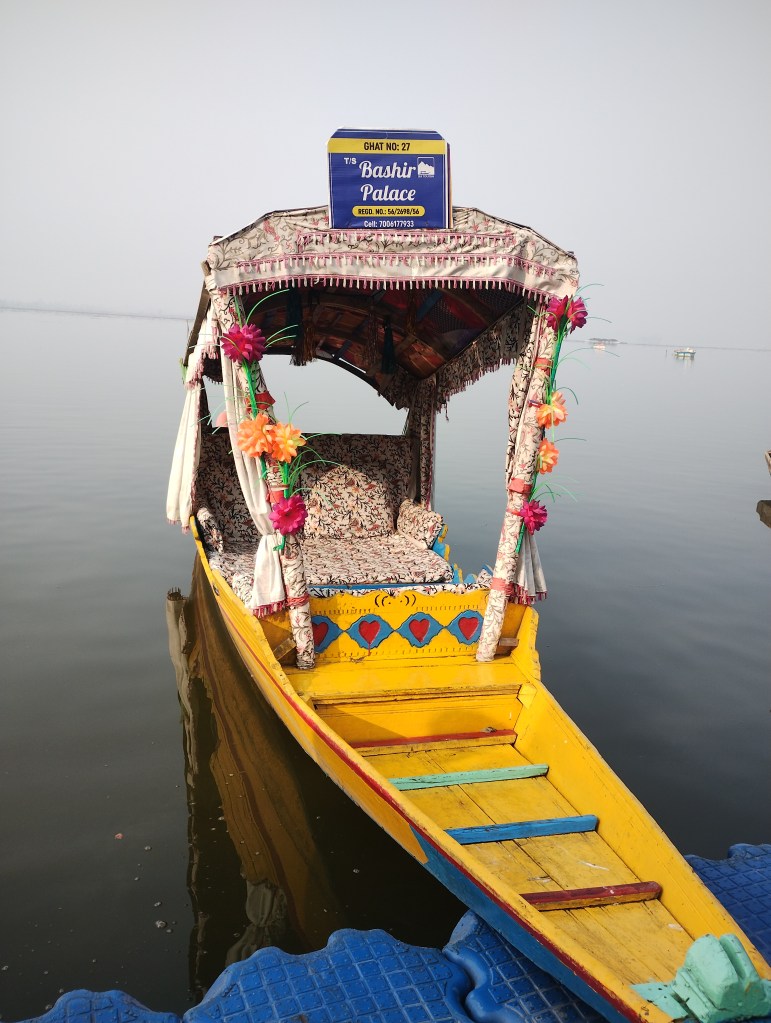
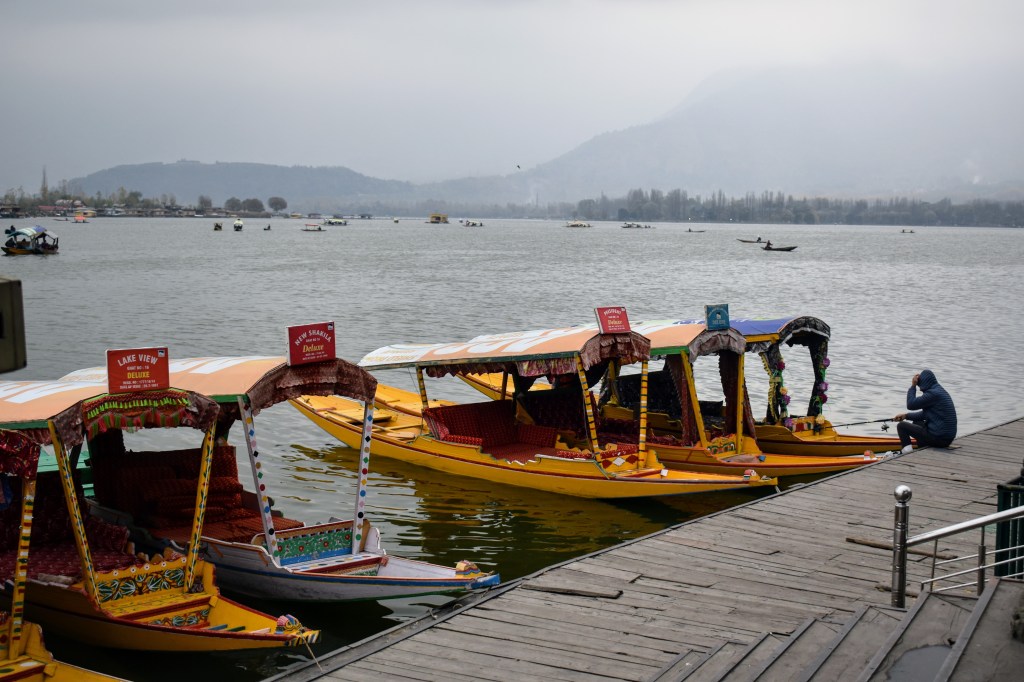
Captured from the banks of Dal Lake, Shikaras rest in the calm waters, set against a hazy autumn morning in Srinagar. The soft mist gently envelops the surroundings, creating a peaceful and ethereal atmosphere, as the distant mountains fade into the fog. A moment of quiet beauty in the heart of Kashmir.
I must admit, riding a Shikara is a one-of-a-kind experience. Enveloped in the royal aura of the boat, we made sure to savour every moment. Even Mr. Bashir, our boatman, had suggested some iconic photo poses for us. As we floated in silence, the soft rhythm of the wind and the gentle movement of the water seemed to create a serene melody. Snuggled in the soft cushions and wrapped in the warmth of my husband’s arm, I was utterly captivated by the peaceful ambience. Mr. Bashir, our boatman, serenaded us with a soulful rendition of ‘Taarif karu kya uski jisne tumhein banaya.’ The lake, the breeze, and his song—it was pure bliss. To top it off, we were fortunate to spot some migratory birds, who had made Dal Lake their temporary home for the season.
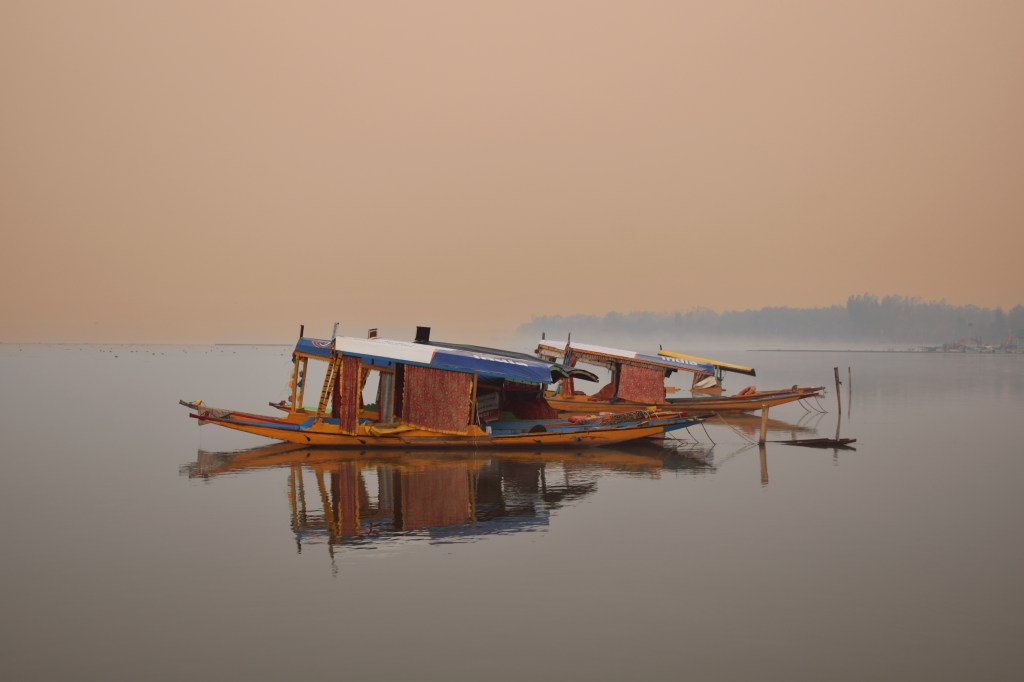
The sight of colourful Shikaras cruising on the magnificent lake is spectacular. Dal Lake, often referred to as the “jewel on the crown” of Srinagar, is as beautiful as it is significant. In the monsoon, it transforms into a lake of flowers, its hydro flora blooming in full splendor. Did you know Dal Lake is actually a natural wetland? It’s the second-largest lake in Srinagar and is divided into four main basins: Gargibal, Lokut Dal, Bod Dal, and Nigeen Lake (yes, Nigeen Lake is part of Dal Lake!). As if that weren’t fascinating enough, Dal Lake is home to two Chinar islands: Rup Lank (Char Chinari) in Lokut Dal and Sona Lank in Bod Dal.
Shikara Tips:
- Shikara rides are available at multiple ghats, but Ghat 16 and beyond (near Nehru Park) offer the best views. The lake widens as you go past Ghat 10, creating a more picturesque setting.
- The floating flower market opens at dawn—a must-see if you’re an early riser.
- Some of the iconic places of interest that you might like to cover while in a Shikara includes Nehru Park Floating Post Office (nearest ghat 14), Char Chinar Island (nearest to ghat 23), Meena bazaar floating market (nearest ghat 15). You can see lotus cultivation either at the backside of meena bazaar or at the far end of dal lake (near Shalimar garden area). Keep in mind that the prices at Meena Bazar tend to be on the higher side, so be prepared to bargain for the best deals.
- Remember, Shikara Ride is charged on hourly basis. For one hour they charged us Rs. 750/- (for two pax) after a heavy bargain. So, in order to save time and money choose starting point of your ride wisely.
- Shikara ride at sunset and sunrise is most recommended. But prior booking is required for a sunrise Shikara when temperature drops very low.
A Taste of Tradition: Kashmiri Wazwan
Basking in the afterglow of the peaceful Shikara ride, we went in search for Kashmiri Wazwan thali, a regal multi-course meal centered around lamb dishes. Following our driver’s recommendation, we headed to a humble local eatery, decorated with wooden interiors and traditional Kashmiri floral print curtains. It wasn’t fancy, but the crowd could tell it was quite popular among tourists.
Our Wazwan thali arrived with 15-16 distinct dishes, enough to satisfy two hungry travelers. The meal was served in metal utensils, mimicking the grandeur of a royal feast. The starters included seekh kebabs, Tabakh Maaz (fried lamb ribs), Methi Maaz (lamb cooked with fenugreek), Paneer Tikka, grilled chicken, and Shami Kebab. All of this was served alongside a fragrant plate of pulao.
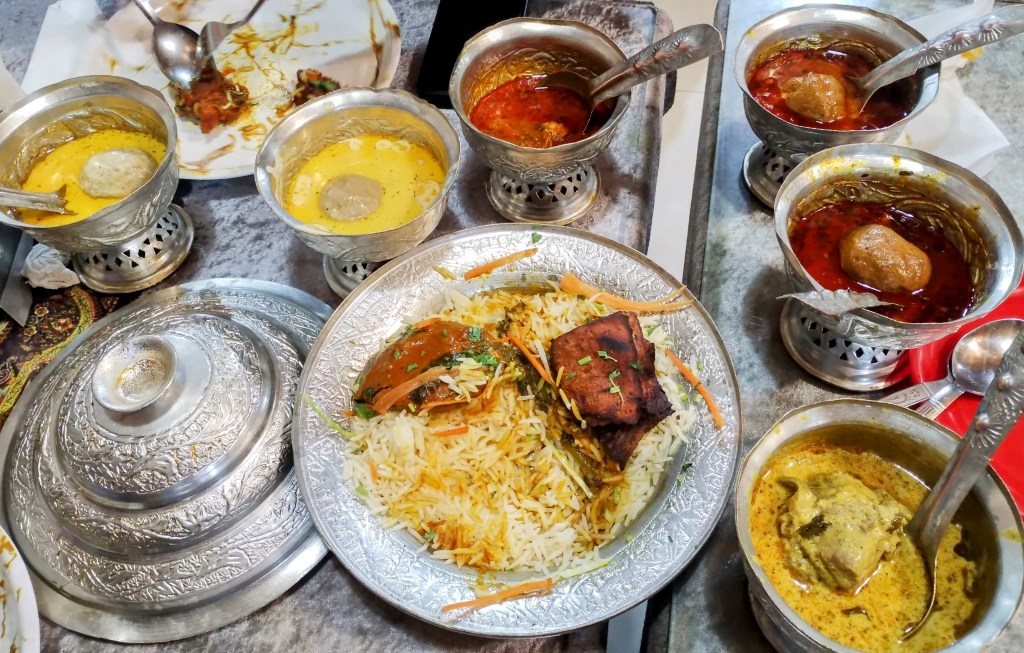
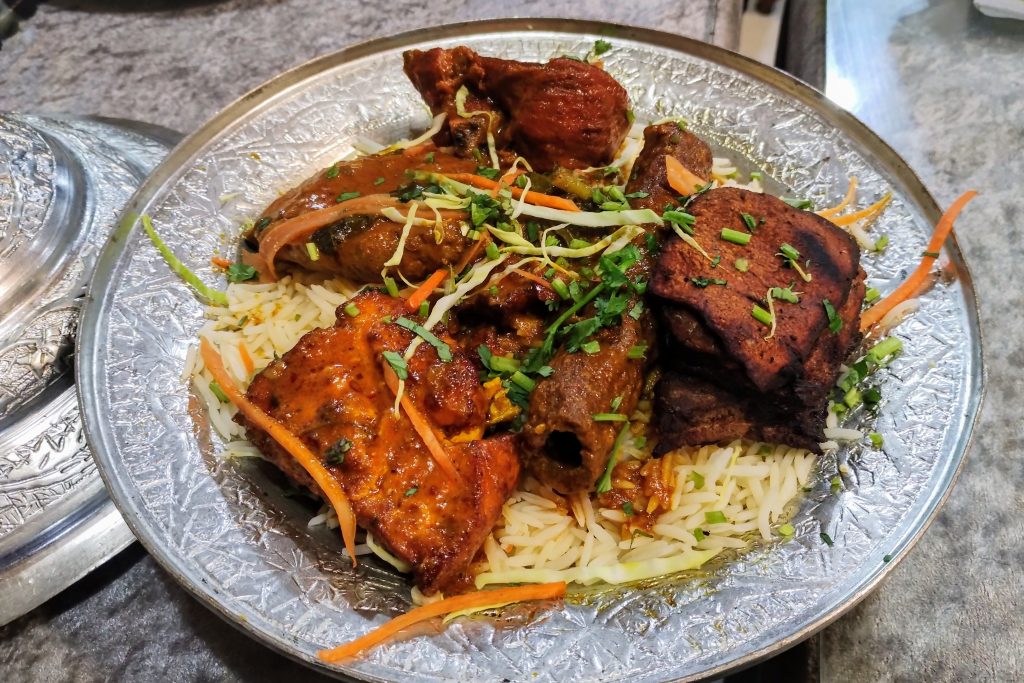
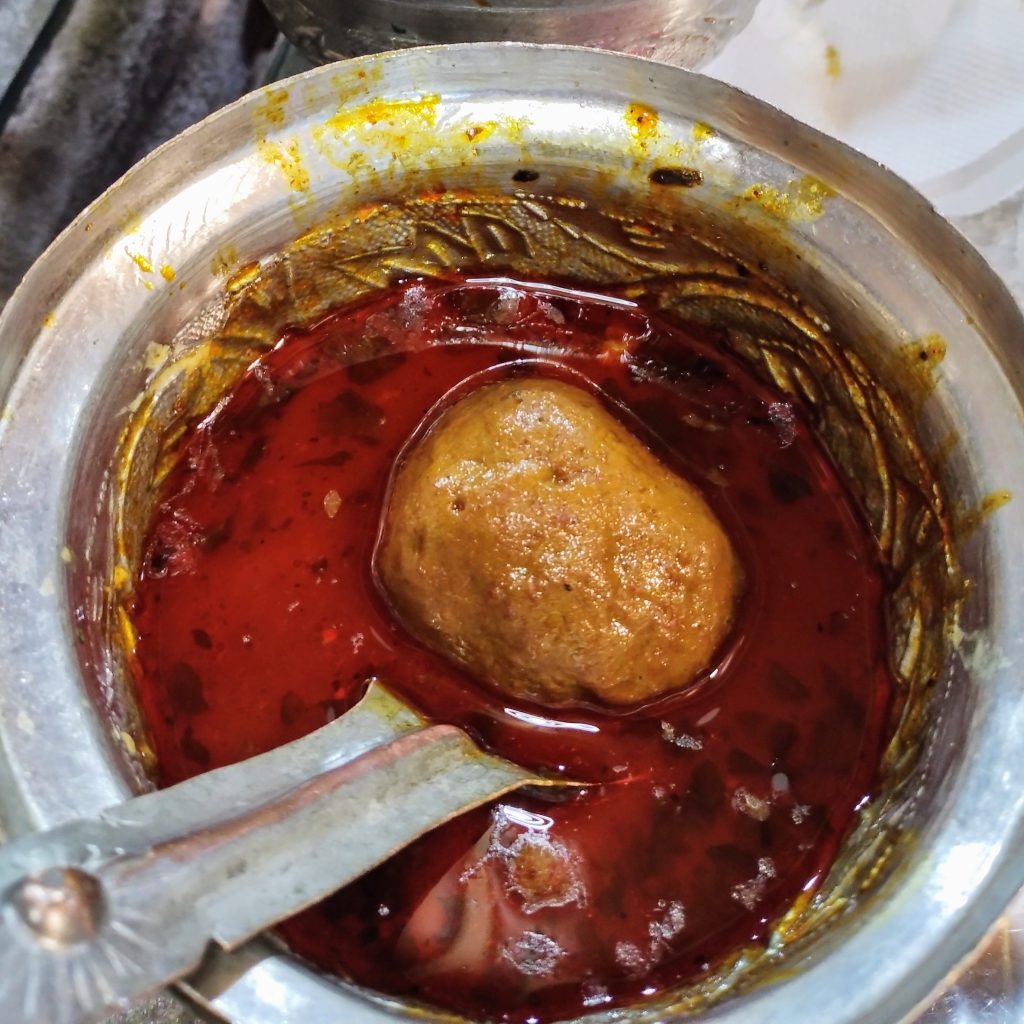
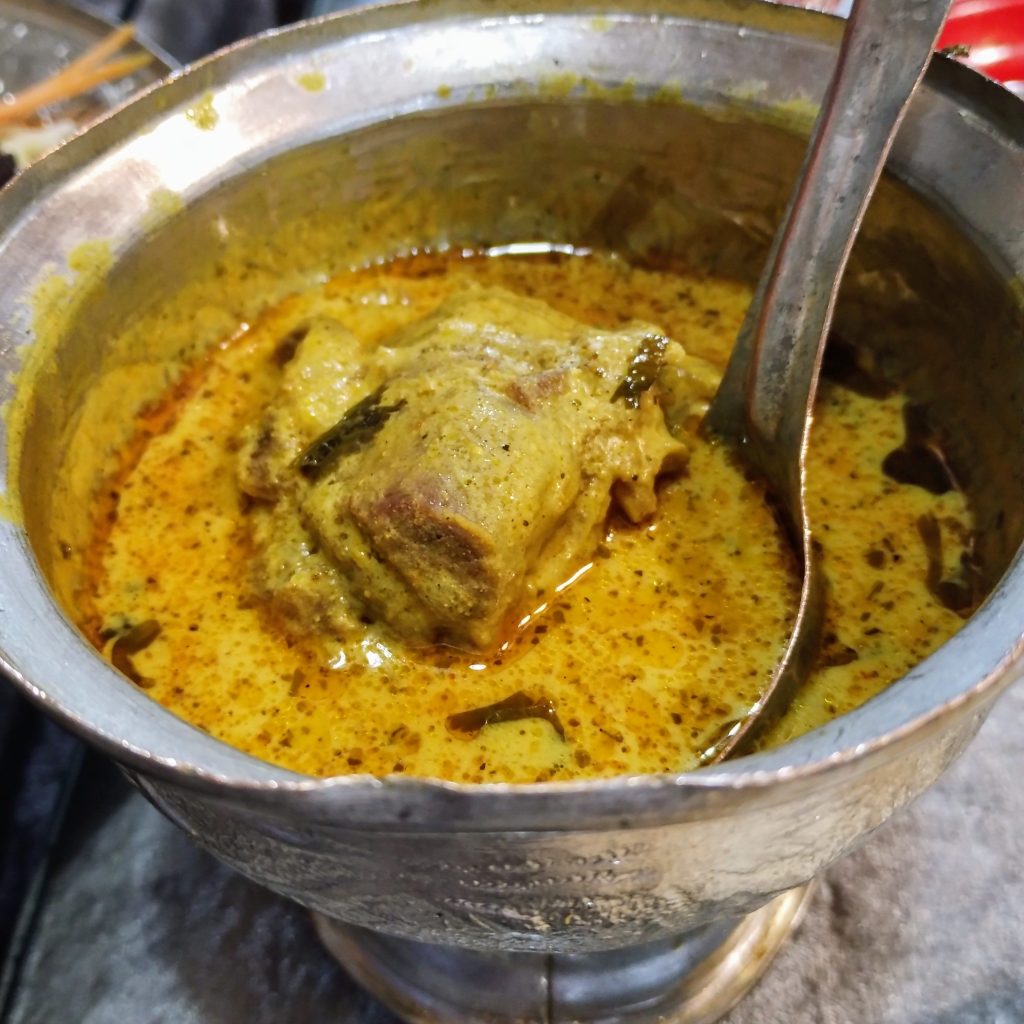
Wazwan – a traditional feast of exquisite dishes. From the mouth-watering starters (top right) to tender Rishta (bottom left) and aromatic Dhaniya Korma (bottom right), a true celebration of Kashmiri culinary heritage.
As we progressed to the main course, we were treated to Mutton Rista (meatballs in a fiery red gravy), Mutton Rogan Josh, Mutton Dhaniya Korma, and Gostaba (meatballs in a creamy sauce). And of course, the meal wouldn’t be complete without padad and chutney. While every dish wasn’t a hit for us, we thoroughly enjoyed the Seekh Kebab, Paneer Tikka, Pulao, Mutton Rista, and Mutton Rogan Josh. It was a hearty meal that definitely gave us a taste of Kashmiri royalty.
Shopping at Lal Chowk
No visit to Srinagar is complete without a trip to Lal Chowk. This bustling marketplace is a sensory overload—filled with vibrant displays of traditional Kashmiri clothing, handicrafts, carpets, bags, and, of course, dry fruits and nuts. The lively streets of Lal Chowk are a shopaholic’s dream, brimming with colorful displays and endless treasures. The market buzzes with the sounds of haggling, laughter, and the occasional call of a vendor offering saffron or walnuts. A few shopkeepers even greeted us in Bengali, reflecting the high number of tourists from West Bengal. I was so caught up in the energy that I almost forgot to take photos. However, I did manage to spot two photogenic spots—Jhelum River Bridge and the Ghanta Ghar (clock tower), both lit up brilliantly in the evening.
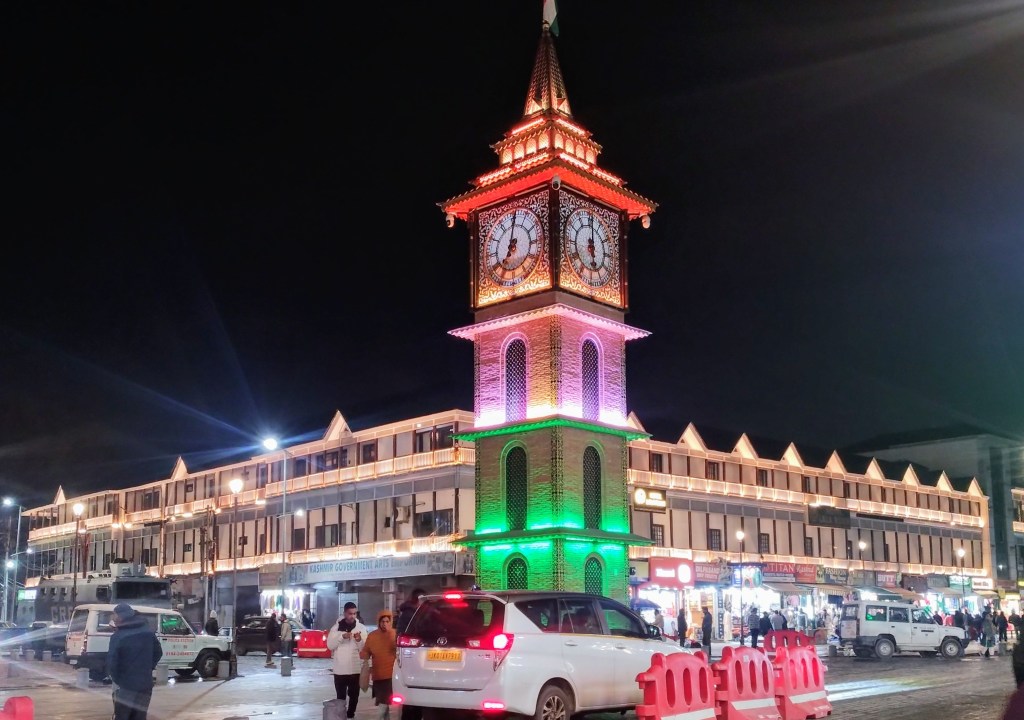
Shopping here is an experience in itself. If you’re after clothing, expect to find affordable deals—provided you’re good at bargaining. I picked up a couple of unstitched Kashmiri suit sets and a traditional Nehru coat for my husband. As for dry fruits, I found a great deal: 1 kg of walnuts, 1 kg of almonds, and 500 grams of dried berries for just ₹800! And, of course, we couldn’t leave without purchasing some saffron (Kesar) at ₹250 per gram.
Where to Stay in Srinagar?
Srinagar offers a wide range of accommodation options to suit every budget. From cozy budget hotels to luxurious resorts, you’ll find something that fits your needs. However, the pocket pinch is on the higher side. If you’re looking for something truly unique, consider staying on a houseboat on Dal Lake. Imagine waking up to witness the first rays of the sun dancing on the water. Most of the houseboats are clustered along the narrow stretch of the lake, offering a memorable experience. Rates start from ₹1,500 per night and can go up to ₹20,000 during peak season.
When to Visit? Srinagar: A Year-Round Destination
Srinagar will mesmerize you all throughout the year, with each season offering something special. In winter (December to January), the city is covered in a blanket of snow, creating a winter wonderland. Spring brings an explosion of flowers, while summer and monsoon turn the city lush and green. Autumn, however, is when Srinagar truly dazzles, with golden leaves turning the city into a living painting. No matter when you visit, always pack warm clothing, as Srinagar sits at a high altitude, and temperatures can dip unexpectedly.
What to eat?
If you’re in Srinagar, don’t miss the Wazwan, not just for the flavors, but for the experience. The sheer number of dishes in a Wazwan meal is a feast for the eyes. However, I think, the items in a wazwan shall taste better if ordered individually and separately. For vegetarians, I recommend trying the local delicacies made from lotus stems (Nadru). And of course, don’t forget to sip on Kashmiri Kawa (traditional tea) and nibble on Kashmiri Kulchas (biscuits) for the perfect culinary experience.
Itinerary
Day 1: Start with sunrise Shikara ride at Dal lake (April to October) (1-2 hours). After breakfast, head to Nishat bagh (1-1.5 hours), Pari Mahal (1 hour), Chasme shahi bagh (30 minutes), Tulip garden (seasonal), Botanical garden (2 hours). You might take a short lunch break at the botanical garden area. Spend your sunset at Shalimar bagh or nigeen lake.
Day 2: Start your day with a hike to Shankaracharya temple (2 hours). Visit a Mughal garden (in case you have missed any) or head to Hazratbal dargah. You might as well enjoy a walking tour through the historic streets of Old Srinagar city, followed by a hearty Kashmiri meal and shopping at lal chowk market. End your day with a sunset Shikara ride on Dal Lake or Nigeen Lake..
If you’re in the mood for non-vegetarian kebabs, head to Khayam Chowk, known for its delicious offerings.
A Final Word
As travelers, it’s essential that we recognize the delicate balance that makes Kashmir so breathtaking. The serene landscapes, pristine waters, and lush gardens are not just sights to behold but a fragile ecosystem that deserves our respect and protection.
As tourists, it’s our responsibility to minimize our environmental footprint by being mindful of waste, especially in areas like Dal Lake, where pollution can harm both the environment and the local way of life. Simple actions, like disposing of waste responsibly, avoiding plastic, and respecting the flora and fauna, can make a significant difference. Additionally, it’s crucial to support local artisans, businesses, and eco-friendly initiatives to contribute directly to the livelihoods of the people who call this paradise home. Let’s relish the unparalleled beauty of Kashmir mindfully.


 Ayantika Malakar
Leave a comment